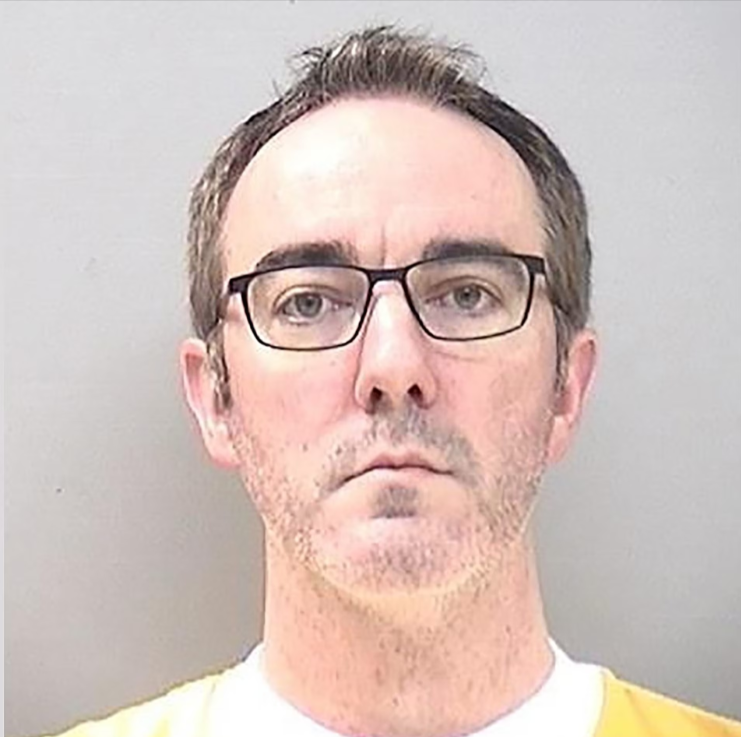
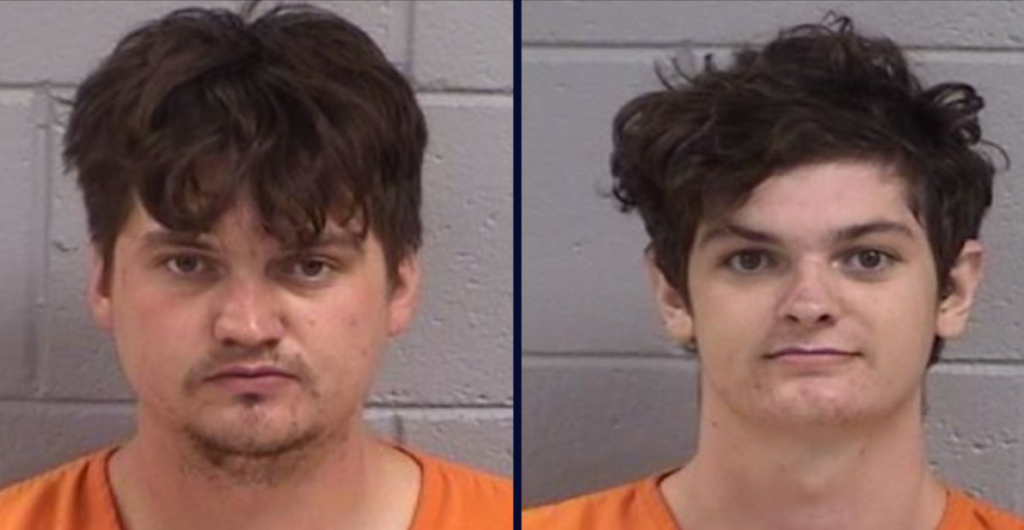
The Menendez Brothers: America’s Most Controversial Murder Case—35 Years of Debate Over Abuse, Greed, and Justice

Erik (left) and Lyle Menendez in court in 1990. The brothers were convicted in 1996 of murdering their parents and sentenced to life without parole.
Case Summary
On August 20, 1989, brothers Erik and Lyle Menendez shot and killed their parents, José and Kitty Menendez, in their Beverly Hills mansion. The brothers claimed they acted in self-defense after years of horrific sexual and emotional abuse by their father. Prosecutors argued they killed for a multimillion-dollar inheritance. After two sensational trials that captivated the nation, the brothers were convicted of first-degree murder in 1996 and sentenced to life without parole. In May 2025, following renewed public attention from a Netflix series and new evidence of abuse, a judge resentenced them to 50 years to life, making them eligible for parole. However, in August 2025, both brothers were denied parole for three years. As of December 2025, they remain in prison, continuing their fight for freedom through multiple legal avenues while the debate rages on: were they cold-blooded killers motivated by greed, or traumatized victims who snapped after years of unspeakable abuse?
August 20, 1989: A Night of Horror in Beverly Hills
BEVERLY HILLS, CALIFORNIA – On a warm summer evening, the Menendez family’s Mediterranean-style mansion on North Elm Drive sat quiet in one of America’s most exclusive neighborhoods. The house had been home to celebrities including Michael Jackson and Elton John. Inside, 45-year-old José Menendez, a successful entertainment executive, and his 47-year-old wife Mary Louise “Kitty” Menendez were watching the James Bond film “The Spy Who Loved Me” in the family’s den.
Just after 10:00 PM, their sons—21-year-old Lyle and 18-year-old Erik—burst into the room carrying Mossberg 12-gauge shotguns loaded with birdshot and buckshot ammunition. What happened next was a scene of unimaginable brutality that would shock the nation and dominate headlines for years to come.
The brothers fired repeatedly at close range. José was shot point-blank in the back of the head, killing him almost instantly. Kitty, seated on the couch, tried to run but was shot in the leg. As she fell and crawled toward a couch, begging for her life, the brothers reloaded and continued firing. In total, José and Kitty were shot 15 times. The crime scene was so gruesome that investigating officers initially suspected a mob hit related to José’s business dealings.
At 11:47 PM, a 911 operator received a hysterical call. “Somebody killed my parents!” Lyle Menendez screamed into the phone, his voice breaking with sobs. When Beverly Hills police arrived at the mansion, they found 18-year-old Erik weeping outside. The brothers told investigators they had been out watching a movie, “Batman,” and came home to discover the horrific scene. They said they initially thought it might be a mob hit because their father had business connections that could have made him a target.
The Privileged Life Before the Murders
To understand the Menendez case, one must first understand the family’s extraordinary success story. José Menendez was born in Cuba in 1944. When Fidel Castro came to power, 16-year-old José was sent to the United States as part of Operation Pedro Pan, a mass exodus of Cuban children. He arrived alone, penniless, and speaking no English.
Through sheer determination and intelligence, José transformed himself into the American Dream incarnate. He earned a swimming scholarship to Southern Illinois University, graduated cum laude with an accounting degree, and climbed the corporate ladder with ruthless efficiency. He became an executive at Hertz Corporation, then RCA Records, and eventually the CEO of LIVE Entertainment, a film studio and home video distribution company. By 1989, his personal estate was worth approximately $14 million.
José married Mary Louise “Kitty” Andersen, a former beauty queen from the suburbs of Chicago, in 1963. Kitty gave up a promising teaching career to become a full-time mother when their first son, Joseph Lyle, was born on January 10, 1968, in New York. Their second son, Erik Galen, was born on November 27, 1970, in Gloucester Township, New Jersey.
The family moved from New Jersey to Calabasas, California, in 1986, and finally to Beverly Hills in 1988 after the boys were caught in a string of burglaries. Both brothers attended Princeton Day School in New Jersey, and later California schools where they excelled at tennis. Lyle was admitted to Princeton University, though he was later suspended for plagiarism. Erik was nationally ranked as the 44th junior tennis player in the United States.
From the outside, they were the platonic ideal of Reagan-era success—a wealthy, attractive family living in a mansion in Beverly Hills. José was known as a demanding, hard-driving father who pushed his sons relentlessly in academics and athletics. Friends and family would later describe him as domineering and controlling, while Kitty struggled with depression and alcoholism, often feeling trapped in the shadow of her husband’s success.
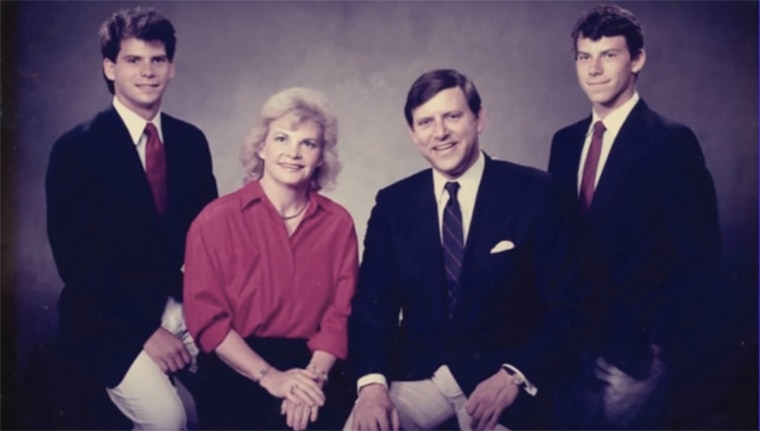
The Menendez family in happier times. José, Kitty, Lyle, and Erik projected an image of wealth and success that masked deep dysfunction.
The Aftermath: A Spending Spree Raises Suspicions
Following their parents’ deaths, the brothers’ behavior quickly raised red flags. José and Kitty’s funeral on August 23, 1989, was attended by about 500 people at Princeton University’s chapel. The brothers gave emotional eulogies, with Erik breaking down in tears.
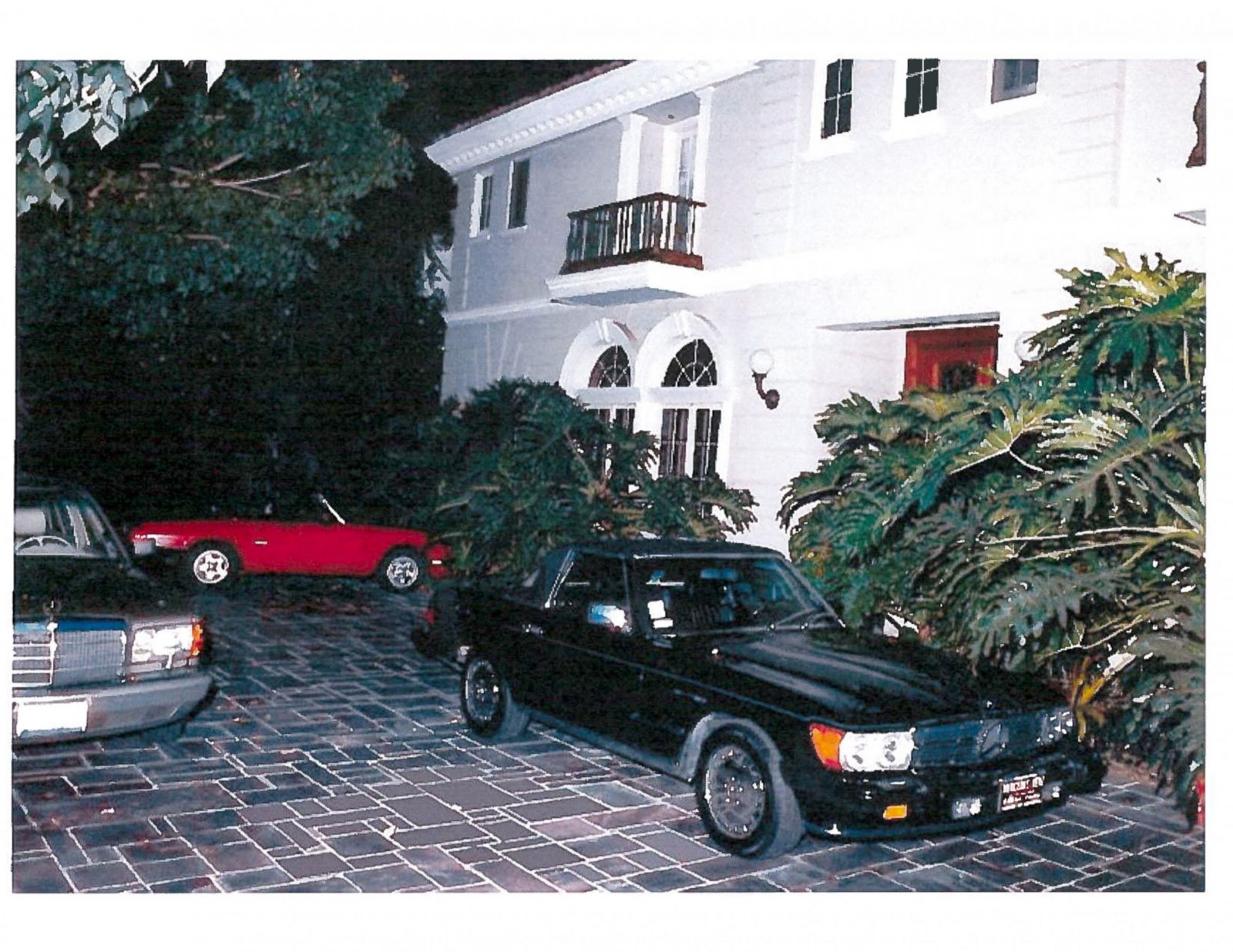
The Menendez family mansion at 722 North Elm Drive in Beverly Hills, where José and Kitty were murdered on August 20, 1989. The Mediterranean-style villa sold for $17 million in 2024.
But within days, the grieving sons embarked on a shocking spending spree. Using their inheritance—which would eventually total around $14 million—Lyle and Erik went on a months-long shopping binge that would later become crucial evidence of their guilt. Lyle purchased a Rolex watch, a Porsche Carrera sports car, and invested $300,000 in a chicken wing restaurant in Princeton. Erik hired a full-time tennis coach for $60,000 per year and bought himself a Jeep Wrangler.

Erik (left) and Lyle Menendez outside their Beverly Hills home in November 1989, three months after murdering their parents. Within months, they had spent over $700,000 of their inheritance.
The brothers spent over $700,000 in the months following the murders. They traveled extensively, stayed in expensive hotels, and lived a lifestyle of complete luxury. The lavish spending drew the attention of investigators, who began to suspect that the sons were not the grieving victims they appeared to be.
Detective Les Zoeller was assigned to the case. From his examination of the crime scene, he determined there had been no forced entry and no evidence of a robbery. The crime scene’s brutality and the spent shotgun shells led some to suspect a professional hit, but Zoeller’s instincts told him something else was at play. However, critical mistakes were made—the brothers were never tested for gunshot residue that night, a lapse that would haunt the prosecution’s case.
The Confession That Broke the Case
Erik Menendez, the younger and more emotionally fragile of the two brothers, was struggling under the weight of what he had done. In October 1989, he began seeing Dr. Jerome Oziel, a Beverly Hills psychologist. During their sessions, Erik became increasingly distraught.
Finally, on October 31, 1989—Halloween—Erik confessed to Dr. Oziel that he and Lyle had murdered their parents. According to later testimony, Erik told the psychologist that they killed José because he was too domineering, had impossibly high expectations, and had planned to disinherit them. They had killed their mother Kitty because she was unhappy in her marriage and would have been devastated by José’s death.
When Lyle learned that Erik had confessed, he confronted Dr. Oziel in his office and, according to the psychologist, threatened his life if he revealed what Erik had told him. Oziel then began secretly recording his therapy sessions with both brothers. These tapes would ultimately become the key evidence that led to their arrests.
The case might have remained unsolved except for Oziel’s mistress, Judalon Smyth. After the psychologist broke up with her in March 1990, Smyth went to Beverly Hills police in a rage and told them that the Menendez brothers had been seeing Oziel and had confessed to murdering their parents.
On March 8, 1990, police arrested Lyle Menendez outside the Beverly Hills mansion as he returned from a tennis lesson. Erik, who was in Israel participating in a tennis tournament, surrendered three days later on March 11 after returning to Los Angeles. Both were charged with first-degree murder with special circumstances—lying in wait and murder for financial gain—which made them eligible for the death penalty.
The First Trial: A Nation Watches
The Menendez brothers’ first trial began in July 1993 and became one of the first major criminal trials to be broadcast live on television. Court TV provided gavel-to-gavel coverage, transforming the proceedings into a national spectacle that riveted millions of Americans.
The brothers had separate juries, though they were tried simultaneously in the same courtroom. The defense strategy was revolutionary for its time: they would not deny that Lyle and Erik killed their parents. Instead, they would argue “imperfect self-defense”—that the brothers genuinely believed they were in imminent danger and killed to protect themselves, even if that belief was not objectively reasonable.

Erik and Lyle Menendez during their first trial in 1993, which was broadcast live on Court TV and captivated the nation.
What followed was testimony that shocked America. Both brothers took the stand and, in graphic and emotional detail, described years of horrific sexual, physical, and emotional abuse at the hands of their father. Lyle testified that José had begun molesting him when he was just six years old, continuing until Lyle was eight. Erik testified that the abuse had continued throughout his childhood and adolescence, occurring regularly up until just weeks before the murders.
Erik testified that he told Lyle about the ongoing abuse for the first time on August 15, 1989—just five days before the murders. According to both brothers, this revelation led to a series of confrontations with their parents. They claimed José became enraged when Lyle confronted him and threatened to kill both sons if they ever told anyone about the abuse. Fearing for their lives, they said they purchased the shotguns for “protection.”
The brothers testified that on the night of August 20, they believed their parents were planning to kill them to prevent the abuse from becoming public. In a state of panic and terror, they claimed, they entered the den and opened fire.
Testimony also painted a disturbing picture of Kitty Menendez. Witnesses described her as emotionally unstable, severely depressed, and dependent on alcohol and prescription drugs. The defense argued that she had been aware of the abuse but had done nothing to stop it, instead emotionally abusing her sons and telling Erik he was worthless.
The prosecution, led by Deputy District Attorneys Pamela Bozanich and Lester Kuriyama, argued that the entire abuse story was a fabrication designed to manipulate the jury. They pointed to the brothers’ spending spree, their lack of visible injuries or medical records documenting abuse, and the fact that neither brother had ever reported abuse to teachers, coaches, friends, or family members.
Most damning was the evidence of premeditation. The brothers had driven to San Diego two days before the murders specifically to purchase the shotguns using a fake ID. After the killings, they had attempted to establish alibis, disposed of the weapons, and lied repeatedly to police. Prosecutors argued this was not the behavior of terrified abuse victims but of calculated murderers who killed their parents for money.
After six months of testimony and dramatic courtroom confrontations, both juries deadlocked in January 1994. Erik’s jury was split 6-6, while Lyle’s jury voted 7-5 for conviction on first-degree murder but couldn’t reach the required unanimous verdict. Mistrials were declared for both brothers.
The hung juries represented a stunning victory for the defense and sparked intense national debate. Many people, particularly women, found the brothers’ testimony credible and felt sympathy for them as abuse survivors. Others were outraged, believing wealthy killers had manipulated the system by claiming abuse.
The Second Trial: A Very Different Outcome
The brothers’ second trial began in October 1995, but the circumstances were drastically different. This time, there was only a single jury for both brothers, not separate panels. More crucially, Judge Stanley Weisberg ruled that much of the defense evidence regarding sexual abuse was inadmissible.
The judge determined that because the defense claimed “imminent danger” on the night of the murders, evidence of abuse that had occurred years earlier or had stopped years before was not relevant. This eviscerated the defense’s strategy. Without the extensive testimony about long-term abuse that had so moved the first trial’s jurors, the case looked very different.
Judge Weisberg also banned cameras from the courtroom, believing the media circus of the first trial had influenced the jurors. Without Court TV broadcasting every moment, public interest waned, and the brothers had far less sympathy in the court of public opinion.
The trial lasted approximately 20 weeks. On March 20, 1996, after five days of deliberation, the jury returned guilty verdicts on two counts of first-degree murder for both Lyle and Erik Menendez. The same jury that convicted them spared them from the death penalty, instead sentencing them to life in prison without the possibility of parole on July 2, 1996.
The brothers were initially held at separate prisons. Lyle was sent to Mule Creek State Prison in Northern California, while Erik went to the California State Prison in Folsom. They would not see each other for nearly 22 years. Both brothers married while incarcerated—California does not allow conjugal visits for inmates serving life sentences, so their marriages have never been consummated.
Life Behind Bars: Rehabilitation or Manipulation?
For over three decades, the Menendez brothers have been model prisoners. Their behavior in prison has become a central point of debate in their ongoing quest for freedom. The brothers’ advocates point to extensive evidence of rehabilitation, personal growth, and positive contributions to prison communities.

Erik (left) and Lyle Menendez in October 2024 booking photos from the California Department of Corrections. The brothers, now 54 and 57, have spent over three decades behind bars.
Erik Menendez became deeply involved in prison programs focused on helping other inmates. He pioneered a hospice program for terminally ill prisoners in California, creating what has been called a template for similar programs. He earned multiple college degrees while incarcerated, worked as a mentor to younger inmates, and participated in therapy and self-improvement programs.
Lyle Menendez founded the GreenSpace program, an initiative focused on environmental sustainability and providing inmates with productive activities. He also earned academic degrees and became known as a peacemaker in prison. Remarkably, corrections officers noted that in 30 years of incarceration, Lyle had never been in a single fight—even when attacked, he would not fight back.
Both brothers received strong endorsements from prison staff, corrections officers, and fellow inmates. Letters supporting their release emphasized how they had helped dozens of incarcerated people, provided leadership in difficult prison environments, and demonstrated genuine remorse for their crimes.
However, critics point to concerning evidence that suggests the brothers have not fully accepted responsibility. Los Angeles County District Attorney Nathan Hochman has been the brothers’ most vocal opponent, arguing they continue to “fabricate a story of self-defense” and have never admitted the full extent of their crimes and cover-up.
Additionally, both brothers committed rule violations even during their resentencing efforts. Erik was found with an illegal cellphone in January 2025, and Lyle was caught with a cellphone in November 2024—infractions that occurred when they knew they were being considered for possible release. These violations raised questions about their judgment and ability to follow rules even when their freedom was at stake.
The Netflix Effect: A New Generation Discovers the Case
For years, the Menendez case seemed like a closed chapter. The brothers’ numerous appeals had been denied, and public interest had faded. But everything changed in September 2024 when Netflix released “Monsters: The Lyle and Erik Menendez Story,” a nine-episode dramatization created by Ryan Murphy.
The series, starring Cooper Koch as Erik and Nicholas Alexander Chavez as Lyle, presented the murders from multiple perspectives and reignited fierce debate about the case. For a new generation that didn’t remember the original trials, the show offered their first exposure to the brothers’ claims of abuse. Social media exploded with discussions, and a viral TikTok movement emerged calling for the brothers’ release.
One month after the scripted series, Netflix released a documentary titled “The Menendez Brothers,” which included audio interviews with Erik and Lyle speaking from prison. The documentary provided their side of the story and reached millions of viewers worldwide.
High-profile advocates emerged. Kim Kardashian wrote a detailed essay arguing for the brothers’ release, calling them survivors of abuse who had been failed by the justice system. Rosie O’Donnell and other celebrities joined the chorus. Young people on social media platforms passionately defended the brothers, many viewing them through the lens of modern understanding of trauma, abuse, and the long-term psychological effects of childhood sexual violence.
The cultural shift was palpable. In the 1990s, the dominant narrative was skepticism about male sexual abuse victims. By 2024, society had evolved dramatically in its understanding of sexual trauma, the dynamics of abuse, and how victims respond to prolonged victimization. What seemed unbelievable to many in the 1990s now seemed entirely plausible to a new generation.
New Evidence Emerges
In May 2023, the brothers’ attorneys filed a habeas corpus petition presenting what they claimed was new evidence that corroborated the abuse allegations. This evidence came in two forms, and its emergence would prove pivotal in the renewed push for the brothers’ freedom.
The first piece of evidence was a letter Erik wrote to his cousin Andy Cano in December 1988—eight months before the murders. In the letter, Erik described the ongoing abuse by his father in distressing terms. The cousin had testified about the abuse at the first trial, but the letter itself had only recently been discovered. It provided contemporaneous documentation of Erik’s allegations written years before the murders and the trial, severely undermining the prosecution’s theory that the abuse story was fabricated after the fact.
The second piece of evidence came from an unexpected source. Roy Rosselló, a former member of the 1980s boy band Menudo, came forward in a 2023 Peacock documentary called “Menendez + Menudo: Boys Betrayed.” Rosselló publicly revealed that José Menendez had drugged and raped him when he was a teenager and Menudo was signed to RCA Records, where José was an executive.
Rosselló’s allegations provided crucial corroboration that José Menendez was, in fact, a sexual predator who had victimized young boys—exactly as the Menendez brothers had claimed. This revelation from an independent source with no connection to the brothers’ case was potentially game-changing.
The Push for Resentencing
By October 2024, the combination of new evidence, renewed public attention, and the brothers’ exemplary prison records created unprecedented momentum for their release. Then-Los Angeles County District Attorney George Gascón, a progressive prosecutor known for criminal justice reform, announced he was recommending resentencing for the brothers.
Gascón argued that while the brothers had committed brutal crimes, they had been “exceptional” inmates who helped others, remained out of trouble, and earned college degrees. He cited evolving understanding of trauma and sexual abuse, noting that male victims of sexual violence were not taken seriously in the 1990s. He recommended their sentences of life without parole be changed to 50 years to life, which would make them immediately eligible for parole under California’s youthful offender law since they were under 26 when they committed the crimes.
However, Gascón lost his reelection bid in November 2024 to Nathan Hochman, a former federal prosecutor who took office in December. Hochman immediately reviewed the case and came to the opposite conclusion. He argued that the brothers had “not demonstrated full insight into their crimes” and continued to pose a risk to society. He tried repeatedly to withdraw Gascón’s resentencing motion and block the brothers’ path to freedom.
Despite Hochman’s opposition, Los Angeles Superior Court Judge Michael Jesic moved forward with the resentencing hearing. On May 13, 2025, after a day-long hearing where family members, former judges, corrections officers, and the brothers themselves testified, Judge Jesic made his decision.
Judge Jesic resentenced both brothers to 50 years to life in prison. The ruling made them immediately eligible for parole, representing a stunning victory and their best chance at freedom in nearly 30 years. The judge cited the brothers’ rehabilitation, supportive letters from prison officials, and the family’s support. While he emphasized that his ruling did not mean they should be immediately released, he believed they deserved the chance to make their case before a parole board.
The Parole Hearings: Hope and Heartbreak
Initially scheduled for June 13, 2025, the parole hearings were postponed to August 21 and 22 to allow more time for preparation. The delay gave the brothers and their attorneys additional time to build the strongest possible case, though it also prolonged the agony of waiting.
Erik Menendez’s hearing took place on August 21, 2025—almost exactly 36 years to the day after he and his brother killed their parents. The hearing lasted nearly 10 hours. Erik appeared via video conference from the Richard J. Donovan Correctional Facility in San Diego, where he and Lyle are both housed. Now 54 years old with gray hair and glasses, Erik made his most detailed public statement in years about the murders, his upbringing, and his transformation in prison.
During the hearing, Erik maintained that he and Lyle killed their parents after years of sexual abuse by their father and felt they were in imminent danger. He described the terror and panic he felt on the night of the murders. When asked why he didn’t simply leave or go to authorities, Erik responded: “My absolute belief that I could not get away. Maybe it sounds completely irrational and unreasonable today.”
He acknowledged the anniversary was significant: “Today is August 21st. Today is the day that all of my victims learned my parents were dead. So today is the anniversary of their trauma journey,” he said, referring to his extended family members.
The parole board heard from about a dozen supportive Menendez family members, corrections officers who praised the brothers, retired judges who knew them through prison programs, and former inmates who credited Erik with helping them turn their lives around. The family members—who are also victims of Erik and Lyle’s crimes since José and Kitty were their relatives—overwhelmingly supported release.
Joan Andersen VanderMolen, Kitty Menendez’s sister, had told reporters at a press conference months earlier: “The brothers were failed by the very people who should have protected them. In the 1990s, the world was not ready to believe boys could be raped. Today, we know better. It’s time to give them the opportunity to live the rest of their lives free from the shadow of their past.”
However, District Attorney Nathan Hochman’s office opposed release, arguing Erik had not taken complete responsibility for his crimes. They cited the brothers’ continued insistence on self-defense, the cell phone violations, and a comprehensive risk assessment conducted by the state parole board that concluded Erik posed a “moderate” risk of violence if released.
Around 5:50 PM on August 21, after ten grueling hours, the parole board delivered its decision: Erik Menendez’s parole was denied for three years. While commissioners commended Erik’s behavior and rehabilitation efforts, they determined he still posed “an unreasonable risk to public safety.”
The family released a statement expressing disappointment but remaining hopeful: “While we respect the decision, today’s outcome was of course disappointing and not what we hoped for. But our belief in Erik remains unwavering and we know he will take the Board’s recommendation in stride.”
The next day, August 22, Lyle Menendez faced his own parole board hearing. Now 57 years old, Lyle appeared via video conference wearing the same prison attire. Commissioner Julie Garland praised Lyle’s behavior, his work on rehabilitation programs, his strong support network, and his post-release plans. She noted his remarkable lack of violence—not a single fight in 30 years despite being attacked.
But like Erik, Lyle was denied parole for three years. Garland explained: “You have been a model inmate in many ways who has demonstrated the potential for change. But there are still signs that you pose a risk to the public.” She specifically cited his illegal possession of cellphones, stating that “incarcerated people who break rules” are more likely to break rules in society. “Citizens are expected to follow the rules whether or not there is some incentive to do so,” she added.
Both brothers can reapply for parole after three years—the shortest denial period under California law. The board indicated they would be considered for an administrative review within one year and could potentially have a hearing moved up to as soon as 18 months if they remain infraction-free and demonstrate continued growth.
Multiple Paths to Freedom
Despite the parole denials, the Menendez brothers are pursuing several avenues that could lead to their release. The parole process is just one of three possible paths to freedom.
First, they can continue through the parole system. After the required three-year waiting period, they will be eligible for another parole hearing. If they maintain perfect behavior and avoid any rule violations, they could potentially have their hearing advanced through the administrative review process.
Second, they have a habeas corpus petition pending that seeks a new trial based on the newly discovered evidence—Erik’s 1988 letter and Roy Rosselló’s allegations about José Menendez. If a court grants this petition, it could result in a new trial where the abuse evidence would be fully presented to a modern jury with contemporary understanding of trauma and sexual abuse. However, District Attorney Nathan Hochman has opposed this petition and filed documents in August 2025 arguing against a new trial.
Third, and perhaps most significantly, California Governor Gavin Newsom has the power to grant clemency at any time. Newsom has been personally involved in the case, ordering a comprehensive risk assessment and indicating he would make a decision around Labor Day 2025. However, as of December 2025, he has not acted.
Newsom previously used his clemency power to deny parole for Sirhan Sirhan, the assassin of Senator Robert F. Kennedy, citing Sirhan’s “refusal to accept responsibility for his crime” and “lack of insight and accountability.” Hochman has repeatedly compared the Menendez case to Sirhan’s, arguing the brothers similarly fabricated their defense and never accepted full responsibility.
The clemency process allows family members to express their opinions to the governor’s office. More than 20 Menendez family members have publicly called for the brothers’ release, creating a unique situation where the victims’ family overwhelmingly supports freeing the perpetrators.
The Debate Continues: Justice or Injustice?
The Menendez case remains one of the most divisive in American criminal justice. The central question that has haunted the case for 36 years persists: were Erik and Lyle Menendez cold-blooded murderers who killed for inheritance, or were they traumatized abuse victims who snapped after years of unspeakable torture?
Those who believe the brothers are guilty of premeditated murder point to compelling evidence: the calculated purchase of weapons in another city, the disposal of the shotgun shells, the fake alibis, the dramatic spending spree, and the fact that no abuse was ever reported to anyone before the murders. They argue that if the brothers were truly terrified, they could have left, gone to police, or told teachers, coaches, or relatives. Instead, they chose to execute their parents and inherit millions.
The prosecution’s theory has always been simple: this was a crime motivated by greed. José Menendez was considering changing his will and might have disinherited his sons. Rather than lose their inheritance, the brothers killed their parents, then fabricated an abuse story when they realized they might get caught. The brutality of the murders—15 shots, reloading multiple times, shooting their mother as she begged for mercy—suggests cold calculation, not panicked self-defense.
Supporters of the brothers counter that the evidence of abuse is overwhelming. Erik’s 1988 letter corroborates his testimony. Roy Rosselló’s independent allegations prove José was a sexual predator. Dozens of witnesses testified to seeing signs of abuse, dysfunction, and José’s domineering, threatening behavior. The brothers’ cousin testified they told him about the abuse as children.
More importantly, defenders argue, our understanding of trauma has evolved dramatically since the 1990s. We now know that abuse victims often don’t report their abuse, especially male victims in an era when toxic masculinity made it impossible to admit victimization. We know that trauma can cause seemingly irrational responses and that abuse victims sometimes lash out violently against their abusers. We understand that the spending spree might have been dissociative behavior—victims trying to escape reality after catastrophic trauma.
The brothers’ 35-year prison record speaks volumes to their supporters. They have helped dozens of inmates, pioneered programs that serve as templates for prison reform, earned multiple degrees, and maintained exemplary behavior. If they were truly sociopathic killers, would they have spent decades helping others and demonstrating remorse?
Critics respond that model prison behavior doesn’t erase the fact that they brutally murdered two people in cold blood. The cellphone violations during their resentencing effort suggest they continue to believe rules don’t apply to them—exactly the entitled mindset that led them to commit murder rather than simply leave home.
Where the Case Stands Today
As of December 2025, Erik and Lyle Menendez remain incarcerated at the Richard J. Donovan Correctional Facility in San Diego. They are housed together for the first time in decades after spending 22 years apart in different prisons. This reunion has been described as profoundly meaningful for both brothers, who remain exceptionally close.
Their legal team, led by prominent attorney Mark Geragos, continues to pursue all available avenues for release. The habeas corpus petition for a new trial remains pending. The clemency request sits on Governor Newsom’s desk. And the brothers now have a clear timeline for their next parole hearing opportunity.
The case has become a flashpoint in broader debates about criminal justice reform, the treatment of abuse survivors in the legal system, and the purpose of incarceration. Is the goal of prison punishment, rehabilitation, or both? If someone commits a terrible crime as a young person but demonstrates sustained rehabilitation over decades, at what point have they served enough time?
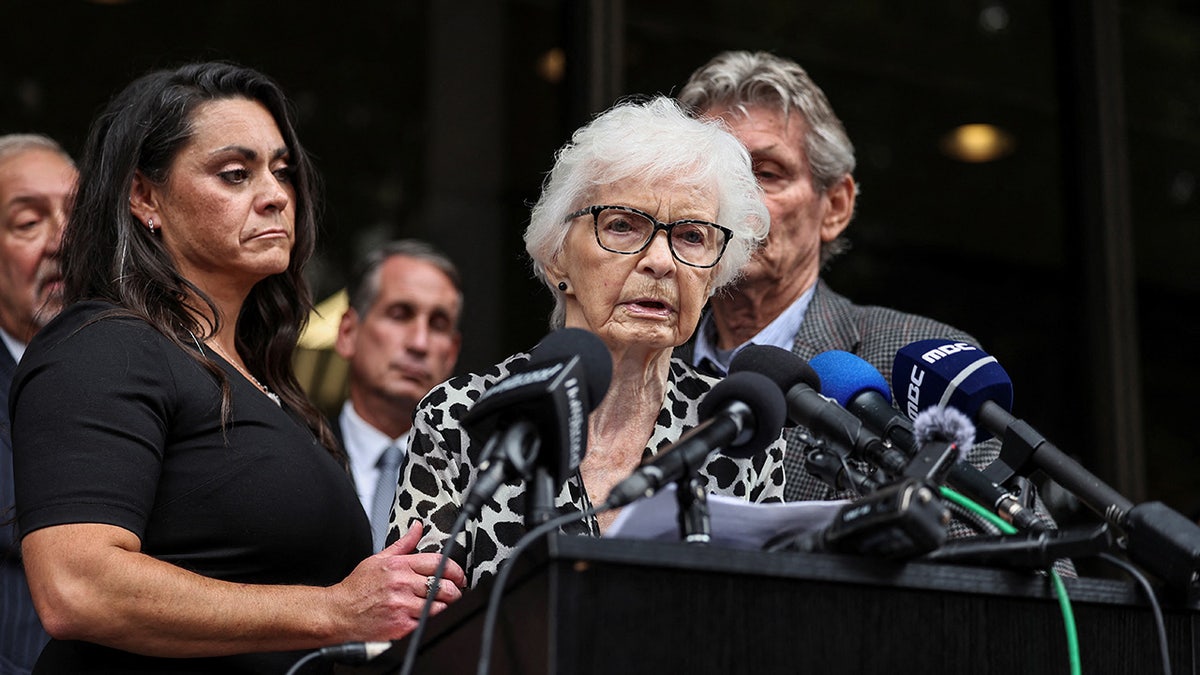
Joan Andersen VanderMolen, Kitty Menendez’s sister, speaks at a press conference in October 2024 calling for the brothers’ release. Over 20 family members support their freedom.
These questions are particularly acute in the Menendez case because of the brothers’ extraordinary prison records and the support from their extended family. As one cousin stated: “We all, on both sides of the family, believe that 35 years is enough.”
The brothers themselves have expressed that their fight is about more than personal freedom. Erik Menendez said after his resentencing: “This has to be the first step in giving people who have no hope in prison some hope. My goal is to ensure there are no more people spending 35 years in prison without hope. That possibility of having hope that rehabilitation works is more important than anything that happened to me today.”
The Unresolved Legacy
Thirty-six years after that terrible night in Beverly Hills, the Menendez case remains unresolved in the court of public opinion. The brothers have powerful advocates arguing they are survivors who deserve freedom. They also have determined opponents who insist they are manipulative killers serving appropriate sentences.
What makes the case so compelling and so divisive is that reasonable people can look at the same facts and reach completely opposite conclusions. The evidence supporting both the abuse narrative and the greed narrative is substantial. The truth may lie somewhere in between—perhaps the brothers were genuinely abused but also motivated by inheritance, creating a complex brew of trauma, rage, and financial opportunism.
The next chapter in this saga will likely be written in 2026 or beyond, when Governor Newsom acts on their clemency petition, when a court rules on their habeas corpus petition, or when they return for another parole hearing. For now, Erik and Lyle Menendez remain in prison, waiting to learn if they will ever walk free or if they will die behind bars, their story forever debated but never fully resolved.
One thing is certain: the Menendez brothers case will continue to fascinate, enrage, and divide Americans for years to come. It touches on fundamental questions about justice, punishment, redemption, abuse, and truth that have no easy answers. And perhaps that complexity, that irreducible ambiguity, is why the case endures in the American consciousness as one of our most controversial and compelling criminal trials.
If you or someone you know has experienced sexual abuse:
RAINN National Sexual Assault Hotline: 1-800-656-4673 (24/7, free, confidential)
National Child Abuse Hotline: 1-800-422-4453
For Male Survivors:
1in6.org – Support for men who have experienced sexual abuse
MaleSurvivor.org – Resources and support
Mental Health Support:
National Suicide Prevention Lifeline: 988
Crisis Text Line: Text HOME to 741741
DISCLAIMER: All information presented in this article is based on publicly available court documents, trial transcripts, news reports from credible sources including CNN, NBC News, ABC News, NPR, The New York Times, Los Angeles Times, and other verified outlets. Erik and Lyle Menendez were convicted of first-degree murder in 1996 and are currently incarcerated. As of December 2025, they are pursuing clemency, a new trial, and future parole hearings. This article presents multiple perspectives on a controversial case that continues to generate debate. Crime Recap makes no independent claims beyond established facts from official sources and court proceedings. For our complete legal disclaimer, please visit our Legal Disclaimer page.