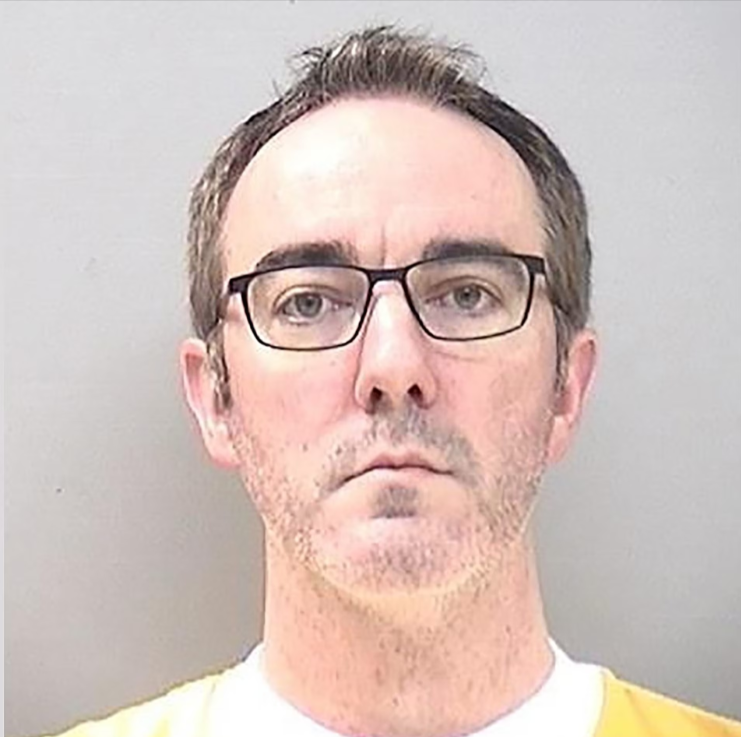
The Black Swan Murder Trial: How a Former Ballerina’s Dream Ended in Her Husband’s Death
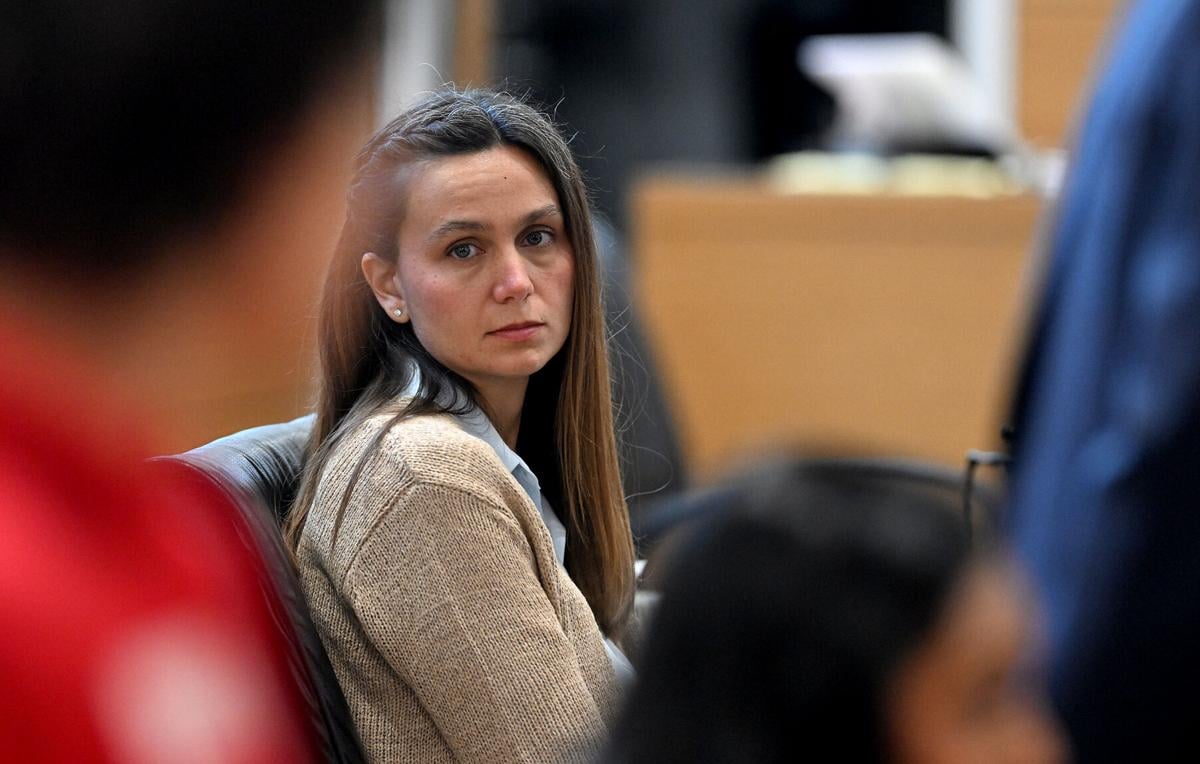
Ashley Benefield during her murder trial at the Manatee County Judicial Center in Bradenton, Florida, July 2024
Case Summary
On September 27, 2020, former professional ballerina Ashley Benefield, 30, fatally shot her estranged husband Doug Benefield, 58, at her mother’s home in Lakewood Ranch, Florida. Ashley claimed she acted in self-defense during a violent confrontation, while prosecutors argued she committed murder to gain sole custody of the couple’s young daughter. The case, dubbed the “Black Swan Murder Trial” by media due to Ashley’s ballet background, captured national attention as it exposed a tumultuous four-year marriage that began with a whirlwind 13-day courtship and included the rise and fall of an ambitious ballet company, bitter custody battles, and conflicting allegations of abuse. In July 2024, after a highly publicized trial, a jury found Ashley guilty of manslaughter with a firearm rather than second-degree murder. On December 3, 2024, she was sentenced to 20 years in prison followed by 10 years of probation, leaving behind their six-year-old daughter and Doug’s adult daughter from a previous marriage.
A Whirlwind Romance: Thirteen Days to “I Do”
PALM BEACH, FLORIDA – On August 25, 2016, at a Republican campaign fundraiser hosted at Dr. Ben Carson’s Palm Beach home, two lives intersected that would ultimately end in tragedy. Ashley Byers, a 24-year-old former ballerina and swimsuit model who was working in Donald Trump’s Sarasota campaign office, met Douglas “Doug” Benefield, a 54-year-old widowed Navy veteran and technology consultant from Charleston, South Carolina.
Despite the 30-year age difference, the attraction was immediate and intense. Ashley later testified that Doug was “funny” and they “clicked right away.” Doug was equally smitten, describing Ashley to friends as “the most beautiful, the most amazing person in the world.” Starting the day after they met, the two were in constant communication via text and phone calls. Within just six days, they exchanged “I love yous.”
On September 6, 2016—a mere 13 days after their first meeting—Doug and Ashley were married at St. Michael’s Episcopal Church in Charleston. The intimate ceremony had no guests except for Doug’s friend Trip Cormeny, who officiated. Doug didn’t even tell his 15-year-old daughter Eva about the marriage initially. Eva’s mother, Renee Cousar Benefield, had died from an undiagnosed heart condition just nine months earlier, and Doug was still navigating his grief while raising his teenage daughter.
Friends and family were shocked by the hasty marriage. Doug’s civil attorney, Stephanie Murphy, would later explain: “A lot of people ask…why on earth did they get married so fast? When Doug first met her, she was every single bit as beautiful as those modeling photos will show…She was a knockout!” For Ashley, who had grown up in Maryland and devoted herself to ballet from age eight, the relationship represented something she had long dreamed of. In a 2014 blog post, she had written: “I know what I want, more than anything. I want to love and be loved. I want to be a woman and a mother. God, bring me a special person chosen for me.”

Ashley and Doug Benefield shortly after their wedding in 2016. The couple married just 13 days after meeting at a political fundraiser.
Building a Dream: The American National Ballet
Ashley had a bold vision: to create an inclusive ballet company that would break from traditional molds. Unlike conventional ballet companies that favored a specific body type and aesthetic, Ashley’s American National Ballet (ANB) would welcome dancers of all heights, body types, and backgrounds. It was a progressive idea in a field often criticized for its rigid standards.
Doug, who friends joked “couldn’t spell ballet” before meeting Ashley, was determined to make his new wife’s dream a reality. According to friend Trip Cormeny, “When you love somebody, what do you wanna do? You wanna make them happy.” Doug threw his energy and resources into launching the ANB in Charleston in 2017. He claimed to have secured a $2.5 million budget for the venture, though this would later prove to be fabricated.
By the summer of 2017, approximately 40 to 45 professional dancers from around the world had been recruited to Charleston to join the groundbreaking company. Among them was Sara Michelle Muraski, a talented ballerina who had lost previous opportunities due to being “too tall,” and 20-year-old Hanna Manka, who faced the opposite challenge of being considered too short. These dancers believed they were joining not just a company, but a revolution in ballet.
Meanwhile, Ashley pursued her other dream: motherhood. Doug had previously had a vasectomy, but he agreed to have it reversed so they could start a family. In July 2017, Ashley became pregnant. However, as the ANB was launching and Ashley was expecting, cracks in the marriage began to show.

Inside the American National Ballet studio in Charleston, South Carolina, founded by Ashley and Doug Benefield in 2017.
The Marriage Crumbles: Violence, Allegations, and a Gun Fired in Anger
Life in the Benefield household was becoming increasingly tense. Ashley struggled to connect with Doug’s teenage daughter Eva, who was still grieving her mother’s death. Ashley felt that Doug consistently chose Eva over her, and the stepmother-stepdaughter relationship deteriorated rapidly. When Ashley found and read Eva’s diary, discovering that the teenager hated her, the situation reached a breaking point.
On June 15, 2017, during a heated argument about Eva, an incident occurred that would become central to the case. According to Ashley’s later testimony, Doug pulled out a loaded handgun, held it to his own head, and threatened to kill himself while forcing Ashley to watch. When Ashley wouldn’t stop talking, Doug fired the gun—putting a hole through the kitchen ceiling. The gunshot was heard by neighbors and would become one of the most disputed incidents in their relationship.
Doug’s close friend Trip Cormeny recalled Doug telling him about the incident with obvious embarrassment: “In his words he said, ‘I did the dumbest thing I’ve ever done in my life.'” Remarkably, Ashley didn’t leave Doug after this frightening display. Two days later, the couple went ahead with their formal wedding reception as planned.
As Ashley’s pregnancy progressed, she experienced complications. In late August 2017, citing a difficult pregnancy and Doug’s inability to care for her properly, Ashley moved back to Florida to stay with her mother, Alicia Byers. The dancers who had relocated to Charleston for the ANB were bewildered by the sudden disappearance of the company’s founder and artistic director.
In September 2017, while Doug was out, Ashley and her mother returned to the Charleston home in secret to collect Ashley’s belongings. Ashley later testified she felt she needed to escape. She left behind a four-page letter for Doug detailing what she described as his abusive and controlling behavior: “Over the past year, we have had good times, yes, but you’ve also displayed scary and irrational behavior with sudden bursts of rage and fits of anger, extremely uncontrollable anger.”
The letter included specific allegations: “When driving with me in the car, you’ve driven erratically, way fast, broken traffic laws, crossed in front of oncoming traffic, driven over a curb, through grass, almost hit several trees and acted like you were going to crash the car.” She concluded with a warning: “Do not harass or try to follow me, or I will call the police and have a restraining order against you.”
The American National Ballet Collapses
With Ashley gone and Doug struggling to maintain the facade of a $2.5 million budget that never existed, the American National Ballet quickly collapsed. Doug had borrowed tens of thousands of dollars to fund the first payroll, hoping he could raise the promised money before anyone discovered the truth. The professional dancers who had relocated their lives to Charleston for this opportunity were left without pay, without jobs, and without answers.
Athena Nikolakopulos, one of the recruited dancers, described the confusion and betrayal: “We get there and we’re like, ‘Where is she?’ And Doug announces that she’s bedridden with a really difficult pregnancy.” The dancers had believed in Ashley’s vision of an inclusive company that would revolutionize ballet. Instead, they found themselves abandoned by both founders, their dreams shattered, and their careers disrupted.
The failure of the ANB added another layer of resentment and conflict to the Benefield marriage. What had begun as a shared dream to change the ballet world had ended in financial deception, broken promises, and dozens of professional dancers left to pick up the pieces of their disrupted careers.
A Secret Birth and Escalating Custody War
On March 15, 2018, Doug sent an email expressing his desire to be present for the birth of his child and to be an active part of the baby’s life. Ashley was weeks away from her due date. The very next day, Ashley had herself induced and gave birth to their daughter, Emerson. She kept the delivery completely hidden from Doug.
According to prosecutors, Doug only learned that his daughter had been born when Ashley filed a restraining order against him, using the newborn’s existence as part of her petition to keep him away. From the moment of Emerson’s birth, Ashley sought full custody and attempted to prevent Doug from having any contact with his daughter.
Ashley filed multiple allegations of abuse against Doug in family court. She accused him of being “manipulative,” “controlling,” and “abusive.” Most shockingly, she alleged that Doug had attempted to poison her during her pregnancy and even claimed he had poisoned his late wife Renee, whose death from a heart condition occurred nine months before Doug met Ashley.
However, a judge who reviewed Ashley’s claims issued a harsh assessment, stating that her allegations did not possess “a single scintilla of credible evidence.” Regarding the poisoning allegations specifically, the judge wrote: “There is not a single scintilla of credible evidence that Ms. Benefield has ever been poisoned or suffered from any illness of any poison.”
Despite the court’s skepticism of her abuse allegations, Ashley was awarded shared custody when Emerson was six months old. Doug and Ashley began a difficult co-parenting arrangement, marked by ongoing conflict and mutual suspicion.
Brief Reconciliation and Final Breakdown
For much of 2019, Doug and Ashley appeared to reconcile. They spent time together as a family with their daughter. Friends and family members hoped that perhaps the couple could overcome their difficulties. However, in August 2019, Ashley showed up to drop off Emerson wearing what Doug believed was an engagement ring—but not from him.
Suspicious that Ashley was seeing someone else, Doug hired a private investigator. The investigator confirmed that Ashley was indeed in a relationship with another man. Feeling betrayed, Doug filed for divorce in late 2019.
Ashley responded by making even more serious allegations. She accused Doug of physically and sexually abusing their young daughter Emerson. Doug vehemently denied these claims. Child Protective Services investigated the allegations thoroughly and found no evidence of abuse. Despite this finding, the accusation became part of the increasingly bitter conflict between the estranged couple.
Throughout their separation, multiple witnesses reported disturbing behavior from Doug as well. Realtor Vincent Vizzacaro testified that Doug had contacted him about purchasing a home directly behind the property where Ashley was living with her mother—despite a restraining order being in place. Ashley reported to law enforcement that she had seen Doug following her multiple times and suspected he had placed a tracking device in her car. A clerical error confused law enforcement about whether Doug could be arrested for violating the court order.
September 27, 2020: The Fatal Night
By September 2020, Doug and Ashley had made a plan to move to Maryland, where they would live separately but both be near their daughter. On September 27, Doug came to Ashley’s mother’s home in Lakewood Ranch, Florida, to help pack their belongings into a U-Haul truck for the move. The decision to relocate appeared to be an attempt to reduce conflict and establish a more stable co-parenting arrangement.
Around 7:00 PM, Ashley’s mother, Alicia, took two-year-old Emerson to a nearby park, leaving Doug and Ashley alone in the house to continue packing. What happened next would become the subject of intense legal scrutiny and contradictory narratives.
According to Ashley’s testimony at trial, she told Doug: “I’m done and you need to leave now.” She claimed Doug responded: “You can’t f—— leave me.” Ashley testified that Doug then struck her on the side of her head, grabbed her, and cornered her in the bedroom. She said she reached for her .45 caliber handgun, which was sitting on top of a storage bin in the room.
“I just held the gun like in front of me and I said, stop, and he like turned and he got into this like almost like a fighting stance,” Ashley testified through tears. “He started like moving his arms and his hands around…he started coming towards me and he lunged at me, and I just pulled the trigger.” When her defense attorney asked why she shot Doug, Ashley replied: “I was scared to death. I thought he was gonna kill me.”
Ashley fired twice. One bullet struck Doug in the outside of his right leg, exiting the inside of his right leg. The second bullet hit his right bicep and traveled into his chest cavity from the right side. Neighbor Amy Carlton heard what sounded like gunshots while on a walk with her husband.
Moments after the shooting, Ashley walked to her neighbor John Sant’s home, gun in hand. Sant’s 911 call captured the immediate aftermath: “Calm down honey, calm down,” Sant can be heard saying, with Ashley crying in the background. Sant told the dispatcher that his neighbor had shot someone and was at his house, quite upset, with the weapon there.
First responders arrived to find Doug shot in the master bedroom of the home. He was still alive but unable to speak. Doug died approximately one hour later at a local hospital, never regaining the ability to communicate what had happened in that room.
The Investigation and Arrest
When crime scene investigators searched the house, they made a troubling discovery: there were three loaded guns in the home that night. In addition to the .45 caliber weapon Ashley used to shoot Doug, investigators found another of Ashley’s guns in her backpack, which was hanging in the closet of the bedroom where the shooting occurred. A third gun, belonging to Ashley’s mother, was found in a kitchen pantry.
The medical examiner’s report raised questions about Ashley’s self-defense claim. According to the autopsy and crime scene analysis, the entry wounds suggested that Doug was not facing Ashley when she began shooting. Additionally, forensic evidence indicated that Doug did not appear to have taken any defensive or combative stance at the time he was shot.
“Based on the entry wounds on Douglas, it does not appear that he was facing Ashley when she began shooting,” court documents stated. “It also does not appear that Douglas had taken any kind of defensive or combative stance.”
Ashley did not make statements to sheriff’s deputies after the shooting. However, her mother Alicia and her family law attorney Faith Brown spoke on her behalf. Alicia claimed that she and Ashley had been living in fear of Doug for three and a half years and had tried unsuccessfully to get help from authorities. Faith Brown, who had represented Ashley in the custody proceedings, made similar statements about Doug’s alleged abusive behavior.
On November 4, 2020, Ashley Benefield was arrested and charged with second-degree murder in the death of Doug Benefield. She was initially held without bond. Weeks later, after a hearing where supporters testified on her behalf—including a Bible teacher who vouched for her character—Ashley was released on bond to await trial.
The Long Road to Trial
For nearly four years, Ashley remained free on bond while the case slowly moved through the legal system. During this time, the case gained national media attention, with numerous outlets dubbing it the “Black Swan Murder Trial” in reference to the 2010 psychological thriller film “Black Swan,” which portrayed a ballerina descending into instability while pursuing perfection.
In July 2023, more than two and a half years after her arrest, Ashley’s defense team filed a motion to dismiss the charges based on Florida’s “Stand Your Ground” law, which allows individuals to use deadly force if they reasonably believe they are in imminent danger of death or great bodily harm. After a two-day hearing, Judge Matthew Whyte denied the motion, ruling that the case should proceed to trial. The judge found that there were sufficient questions about what happened that night that a jury should decide Ashley’s fate.
The Black Swan Murder Trial: July 2024
On July 23, 2024, the trial of Ashley Benefield finally began at the Manatee County Judicial Center in Bradenton, Florida. The courtroom was packed with media, Doug’s family members, and Ashley’s supporters. Outside the courthouse, a small group appeared to support Ashley’s self-defense claims, including her mother Alicia and six-year-old Emerson, who told a reporter: “It feels like I’m standing up for the right thing and that I’m doing the right thing for her.”
Emerson’s public statement caught the attention of her older half-sister, Eva Benefield, who had nearly half a million followers on TikTok as “evathefreakindiva.” Eva posted a video expressing her dismay: “So, I think that we should probably stop shoving cameras in 6-year-old’s faces when they have no idea what’s going on.”
Assistant State Attorney Suzanne O’Donnell presented the prosecution’s case with a clear narrative: this was not self-defense but cold-blooded murder motivated by Ashley’s desire to be a single mother with sole custody of Emerson. “This case is about a woman who, very early on in her pregnancy, decided she wanted to be a single mother,” O’Donnell argued. “Her husband and everything she did from that point on was to attain that goal and she would stop at nothing to attain that goal.”
The prosecution called numerous witnesses to paint a picture of Doug as a kind, generous man who was not abusive. Eva Benefield, now 23 years old, testified about living with Doug and Ashley as newlyweds. When asked if she ever heard her father yell at, threaten, or get physical with Ashley, Eva answered “no” to each question. Doug’s friends and family members described him as someone who could get frustrated but never acted violently toward Ashley.
Prosecutors argued that Ashley had systematically tried to alienate Doug from his daughter, making false allegations to keep him away, and ultimately killed him when all other efforts had failed. They presented the forensic evidence showing the angles of the bullet wounds, suggesting Doug was not in an attacking position when shot.
The Defense: A Portrait of Abuse and Fear
Defense attorney Neil Taylor presented a starkly different narrative. “Douglas Benefield was a violent abuser,” Taylor stated in his opening argument. “Ashley Benefield’s efforts to placate him was absolutely consistent with what abused women do.” Taylor argued that Ashley had spent years trying to escape an abusive relationship and that on the night of September 27, 2020, she feared for her life.
The defense called several expert witnesses to support their case. Dr. Jason Quintal, a therapist who had worked with the couple, described Doug as “somebody who was domineering” and “super-controlling.” Bruce Ferris, a mental health professional specializing in domestic and family trauma, testified that Ashley’s behaviors fit the pattern of someone who is a victim of domestic abuse.
The defense presented evidence of Doug’s alleged controlling behavior, including the testimony of realtor Vincent Vizzacaro about Doug’s attempt to purchase a home directly behind where Ashley was living. The defense also called the couple’s marital counselor, who testified about observing a cycle of abuse in the relationship.
Michael Haag, a forensics expert hired by the defense, testified about bullet trajectories from the crime scene. He suggested that Ashley had to have been moving during the shooting, which could be consistent with her claim that Doug was advancing on her. This contradicted the prosecution’s theory that she shot him from behind without provocation.
Ashley Takes the Stand
The most dramatic moment of the trial came when Ashley Benefield testified in her own defense. It was the first time she had publicly described what happened that night. In emotionally charged testimony that lasted for hours, Ashley detailed what she described as years of abuse, manipulation, and fear.
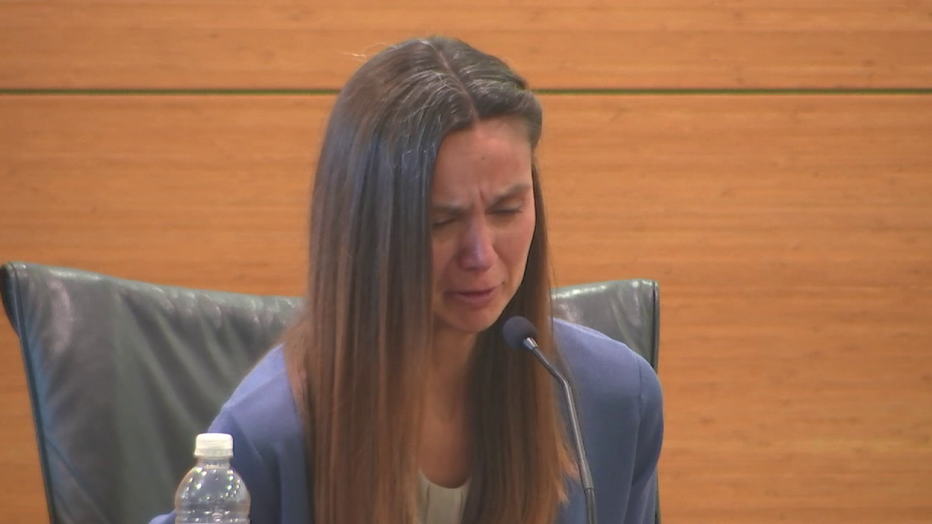
Ashley Benefield testifies emotionally during her murder trial in July 2024, describing the night she shot Doug Benefield.
She testified about Doug firing the gun into the ceiling, about him punching holes in walls, about him allegedly striking their family dog so hard the animal went unconscious, and about him throwing a loaded handgun at her. She described Doug as someone who was loving and attentive at first but who became increasingly volatile, controlling, and terrifying.
When describing the night of the shooting, Ashley broke down in tears multiple times. She insisted that she only shot Doug because she believed he was about to kill her. “I was scared to death,” she testified. “I thought he was going to kill me.”
During cross-examination, Prosecutor O’Donnell challenged Ashley’s account, pointing to the forensic evidence and questioning why, if she feared Doug so much, she had agreed to be alone with him that evening. O’Donnell suggested that Ashley had planned to kill Doug all along, waiting for the moment when her mother had taken Emerson out of the house and they were alone.
The Jury’s Verdict: Guilty of Manslaughter
After hearing closing arguments on July 30, 2024, the jury began deliberations. They faced a difficult decision: was this second-degree murder, manslaughter, or justifiable self-defense?
That evening, the jury returned with their verdict. They found Ashley Benefield guilty of manslaughter with a firearm—a lesser charge than the second-degree murder the prosecution had sought, but a rejection of the self-defense claim. The manslaughter verdict suggested that the jury believed Ashley had acted without legal justification but perhaps without the premeditation required for a murder conviction.
Ashley faced up to 30 years in prison. Her sentencing was initially scheduled for October 22, 2024, but was postponed after her defense team filed a motion for a retrial, alleging juror misconduct. The defense claimed that one juror had lied on a questionnaire during jury selection about having no experience with domestic violence courts or custody arguments. The defense alleged that this juror had actually been served an injunction during a custody battle and had been named as a victim in several domestic violence cases.
A hearing was held where jurors were questioned about the allegations. The judge ultimately denied the motion for a new trial, finding insufficient evidence of misconduct that would have affected the verdict.
Sentencing: Twenty Years Behind Bars
On December 3, 2024, Ashley Benefield returned to the Manatee County courtroom for sentencing. The hearing was emotional, with both Doug’s family and Ashley’s supporters present. Eva Benefield, Doug’s daughter, addressed Ashley directly: “Ashley, since the day you shot my father, I only have one question to ask you. Why?” She described her father as “kind to a fault,” “smart,” “strong,” and “generous,” adding: “His generosity is what got him killed.”

Ashley Benefield during her trial in July 2024. She was convicted of manslaughter and sentenced to 20 years in prison.
Doug’s brother, David Benefield, spoke through tears: “Ashley, I want you to know that I forgive you. You have caused me the greatest loss that I have experienced.”
Ashley’s therapist testified that Ashley had been under extreme duress at the time of the shooting and was in “full survival mode, fully believing that her life was in danger.” Defense attorney Neil Taylor argued for a sentence below the minimum, citing factors including Ashley’s claim that she acted under extreme duress, her diagnosed PTSD, her remorse, and his assertion that Doug had been “the initiator, provoker or aggressor.”
The prosecution pushed for the maximum sentence of 30 years. Assistant State Attorney Suzanne O’Donnell argued: “This entire trial has been about pretty much demonizing Doug Benefield and making this defendant the victim. She had a goal to raise this child by herself and get Doug Benefield out of their lives, and this was the culmination of that pattern.”
Circuit Court Judge Matthew Whyte acknowledged the complexity of the case and the different perspectives in the courtroom. “I understand, completely, that two sides of this room are viewing the same case through very different lenses,” the judge said. He found that some of the factors cited by the defense had been proven, but not all of them.
Judge Whyte sentenced Ashley Benefield to 20 years in prison, with credit for time served, followed by 10 years of probation. The sentence was less than the maximum but still meant that Ashley, now 33 years old, would not be eligible for release until she is 53 years old. Her daughter Emerson, now six, will be 26 when her mother is released.
Speaking outside the courthouse after sentencing, Doug’s cousin Tommy Benefield reflected on the outcome: “The sentencing means we know what it’s going to cost her, finally, as opposed to what it’s cost their daughter, Ashley and Doug’s daughter, what it’s cost Eva every day in her life to miss her dad the way that only he could do.”
Eva Benefield told reporters: “I’ve waited so long to be able to speak to her face-to-face…I hope prison serves her well.” When asked about her feelings, Eva said she was “content” with the sentencing.
Ashley has 30 days to appeal her sentence. As of December 2024, no appeal has been filed.
Two Narratives, One Tragedy
The Black Swan Murder Trial exposed two radically different versions of the Benefield marriage. To prosecutors and Doug’s family, Ashley was a manipulative woman who had fabricated abuse allegations from the start, determined to be a single mother and willing to kill to achieve that goal. They point to the judge’s finding that there was no credible evidence of poisoning, to Ashley keeping Doug from his daughter’s birth, to the false allegations of child abuse that were investigated and dismissed, and to the forensic evidence suggesting Doug was not in an attacking position when shot.
To Ashley and her supporters, she was a victim of domestic abuse who endured years of Doug’s controlling, threatening, and violent behavior. They point to the gun fired into the ceiling, to Doug’s admitted anger issues, to his attempt to buy a house behind hers despite a restraining order, to expert testimony about patterns of abuse, and to Ashley’s genuine fear on the night of the shooting.
The jury’s manslaughter verdict suggests they found truth somewhere between these narratives—that Ashley was not justified in killing Doug, but perhaps the circumstances were not as clear-cut as a straightforward murder case. The manslaughter conviction indicates the jury may have believed Ashley truly feared Doug that night, even if her fear did not legally justify taking his life.
The Children Left Behind
The most tragic aspect of the Black Swan case is the devastating impact on the two children who loved Doug Benefield. Eva Benefield lost her mother Renee to a heart condition in 2015, just months before her father met Ashley. By 2020, when she was 19 years old, her father was dead as well. Eva has spoken publicly about the trauma of attending the trial and hearing her father’s death described in clinical, forensic terms.
“They referred to the murder, the shooting as the incident,” Eva said through tears, “and they pulled up pictures of his body and, you know, they referred to my dad as the victim. It’s been difficult for me to kind of grasp what’s going on and then hearing about it over again and over again and over again. It’s just—it’s a lot.”
Six-year-old Emerson Benefield has now lost both of her parents—her father to gun violence and her mother to prison. She was only two years old when the shooting occurred and will grow up with limited memories of life before that night. Her mother will be incarcerated for most of her childhood and young adult years.
The custody arrangement for Emerson was not publicly disclosed, though it is believed she remains in the care of her maternal grandmother, Alicia Byers, who has been a constant presence throughout Ashley’s legal proceedings.
Domestic Violence: The Hidden Epidemic
The Black Swan case arrived at a time of increased national attention to domestic violence. According to the FBI, domestic homicides more than doubled between 2019 and 2024, increasing from 1,065 to 2,339—an alarming trend that has experts deeply concerned. Almost 5.4 million Americans reported being victims of domestic violence between 2019 and 2024, with nearly 80 percent being women.
The case highlighted the challenges of evaluating competing claims of abuse, particularly when both parties allege mistreatment. Ashley’s allegations of abuse were deemed not credible by family court judges, yet her defense team presented expert testimony suggesting she exhibited classic signs of being an abuse victim. Doug’s family and friends adamantly maintained he was never abusive, yet the incident of firing a gun into the ceiling was undisputed.
Manhattan District Attorney Alvin Bragg, who prosecutes numerous domestic violence cases, noted that “intimate partner violence is one of the most common charges in the borough of Manhattan, in the city of New York and nationwide.” The challenge, according to experts, is that intimate partner violence often goes unreported and can involve complex patterns of control, manipulation, and fear that may not leave physical evidence.
The “Black Swan” Label and Media Spectacle
The media’s decision to label this case the “Black Swan Murder Trial” drew criticism from some quarters who felt it trivialized a serious case of intimate partner violence and homicide. The reference to the 2010 film “Black Swan,” which portrayed a ballerina’s descent into psychological instability while pursuing perfection, created a narrative framework that may have influenced public perception of Ashley as mentally unstable rather than as either an abuse victim or a calculating killer.
Ashley herself addressed the label in an interview with ABC’s “20/20” after her conviction: “For the past four years, I have lived with the media moniker ‘Black Swan’—a label in stark contrast to the elegance of my former ballet career,” she said. “I don’t know how to convince people. I apparently cry at the wrong times and don’t cry when I should. I’ve been criticized by so many people and so many things. They don’t like the way I talk or the way I blink or the way I wear my hair, and for whatever reason, they’ve just decided that they don’t want to believe me.”
The case generated enormous media coverage, including a six-part podcast by Law & Crime called “Black Swan Murder,” multiple “48 Hours” specials on CBS, extensive Court TV coverage of the trial, and features on virtually every major true crime platform. The public’s fascination with the case stemmed from multiple factors: the whirlwind romance, the dramatic age difference, the ambitious ballet company that failed, the bitter custody battle, and most of all, the fundamental question of what really happened in that bedroom on September 27, 2020.
Legal and Social Implications
The Benefield case raises important questions about how the legal system evaluates self-defense claims, particularly in cases involving allegations of domestic abuse. Florida’s “Stand Your Ground” law allows individuals to use deadly force without a duty to retreat if they reasonably believe they are in imminent danger. However, the law requires that the belief be both genuine and objectively reasonable.
Ashley’s Stand Your Ground hearing in 2023 was unsuccessful, with the judge finding that there were genuine factual questions about whether Ashley’s fear was reasonable given the circumstances. The forensic evidence showing Doug was not facing Ashley when shot was a significant factor in that decision.
The case also highlighted ongoing debates about how domestic violence victims are treated by the legal system. Some advocates pointed out that Ashley’s behavior—including not immediately reporting abuse, attempting to maintain relationships with her abuser, and even having additional confrontations—is entirely consistent with how many domestic violence victims actually behave. Others argued that Ashley’s pattern of making serious allegations that were repeatedly deemed not credible by courts undermined her claims.
The verdict—manslaughter rather than murder or acquittal—suggests the jury struggled with these same questions. They did not believe Ashley was telling the complete truth about what happened, but they also did not find evidence of the premeditated murder the prosecution described.
Where the Case Stands Today
As of December 2025, Ashley Benefield is serving her 20-year sentence in a Florida state prison. She has been exploring the possibility of starting a ballet program within the prison system, according to reports from her legal team. Prison officials have not commented on whether such a program would be feasible or permitted.
Ashley’s attorneys have indicated they are considering an appeal, though no formal appeal has been filed as of this writing. Any appeal would likely focus on the denial of the Stand Your Ground motion and potentially challenge the admission or exclusion of certain evidence at trial.
Eva Benefield has continued to speak publicly about her father and the impact of his death on her life. On TikTok, where she has a substantial following, she has shared her grief, her anger at Ashley, and her efforts to keep her father’s memory alive. She has also become an advocate for children who lose parents to violence.
Six-year-old Emerson remains out of the public eye, with her grandmother carefully protecting her privacy as she grows up amid the shadow of her parents’ tragic story.
The American National Ballet, the ambitious dream that brought Doug and Ashley together, is long forgotten except as a footnote to their story. The dancers who relocated to Charleston in 2017 have moved on to other companies and other dreams, though some have spoken publicly about feeling betrayed by what they described as false promises and a company that never had a real foundation.
The Unanswerable Questions
In the end, the Black Swan Murder Trial leaves more questions than answers. Did Doug Benefield abuse Ashley, or was she fabricating allegations to gain custody? Was Doug controlling and violent, or was he a devoted father fighting for access to his daughter? Did Ashley truly fear for her life on September 27, 2020, or did she see an opportunity to permanently remove Doug from her life and her daughter’s life?
The only two people who know exactly what happened in that bedroom are Doug, who is dead, and Ashley, whose account was rejected by a jury. The forensic evidence provides some answers but cannot fully reconstruct the emotions, the fear, the anger, or the intentions that led to those fatal shots.
What is certain is that a man is dead, a woman is in prison, and two children have been robbed of their parents. Whatever the truth about the Benefield marriage—whether it was a story of abuse and survival or manipulation and murder—the ending is tragic for everyone involved.
The case serves as a sobering reminder of how quickly romantic relationships can turn toxic and how difficult it can be for the legal system to untangle competing narratives of abuse and violence. It highlights the life-and-death stakes of domestic violence cases and the devastating ripple effects when intimate partner conflicts escalate to lethal violence.
As Ashley Benefield begins her decades in prison and as Eva and Emerson navigate their grief and loss, the question that started this article remains: What really happened in that bedroom on September 27, 2020? The legal system has provided its answer with the manslaughter conviction. Public opinion remains divided. And the complete truth may never be fully known.
If you or someone you know is experiencing domestic violence:
National Domestic Violence Hotline: 1-800-799-SAFE (7233) – Available 24/7, confidential support
National Coalition Against Domestic Violence: www.ncadv.org
Text START to 88788 for help via SMS
Additional Resources:
National Center on Domestic Violence, Trauma & Mental Health: www.nationalcenterdvtraumamh.org
Safety planning resources available at www.thehotline.org/plan-for-safety
Legal assistance directory: www.womenslaw.org
DISCLAIMER: All information presented in this article is based on publicly available court documents, trial testimony, police reports, official investigations, and credible news sources. Ashley Benefield was convicted of manslaughter with a firearm in July 2024 and sentenced to 20 years in prison in December 2024. The case involved competing narratives about domestic violence, with both parties making allegations of abuse. Crime Recap presents the facts as established in court proceedings and does not make independent determinations about contested allegations. This article discusses intimate partner violence and homicide. For our complete legal disclaimer, please visit our Legal Disclaimer page.