
Sam Bankman-Fried: How Crypto’s “Golden Boy” Built a $32 Billion Empire on Lies and Lost It All in Days
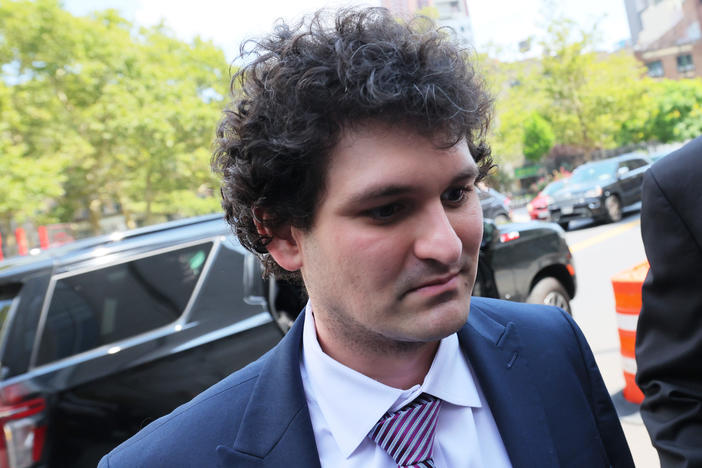
Sam Bankman-Fried arrives at Manhattan Federal Court in March 2024 for his sentencing hearing. Once worth $26 billion, he was sentenced to 25 years in prison for orchestrating one of the largest financial frauds in history.
Case Summary
Sam Bankman-Fried, known as “SBF,” rose from obscure trader to cryptocurrency billionaire in just three years, building FTX into the world’s second-largest crypto exchange valued at $32 billion. Behind the scenes, he was secretly funneling billions of dollars in customer deposits to his hedge fund Alameda Research to cover massive trading losses, make risky investments, buy luxury real estate, and donate to political campaigns. When the scheme unraveled in November 2022, FTX collapsed in a matter of days, leaving a shortfall of at least $8 billion in customer funds. Bankman-Fried was arrested in December 2022 and convicted in November 2023 on seven counts of fraud, conspiracy, and money laundering. On March 28, 2024, he was sentenced to 25 years in federal prison and ordered to forfeit $11 billion. Called the “Bernie Madoff of crypto,” Bankman-Fried’s fall from grace was one of the swiftest and most spectacular in financial history—a cautionary tale of unchecked ambition, regulatory failure, and the dangers of an industry built on hype rather than oversight.
The Rise: From Math Nerd to Crypto Billionaire
Samuel Benjamin Bankman-Fried was born on March 5, 1992, in Stanford, California, into an academic family. Both of his parents were professors at Stanford Law School—his father Allan Joseph Bankman specialized in tax law, while his mother Barbara Fried focused on legal ethics. Growing up in this intellectually rigorous environment, Sam excelled academically and developed a passion for mathematics and problem-solving.
Bankman-Fried attended MIT, where he majored in physics and mathematics, graduating in 2014. During college, he became interested in effective altruism—a philosophical movement that uses evidence and reason to determine how to benefit others as much as possible. The concept would later become central to his public persona, though prosecutors would argue it was largely performative.
After graduation, Bankman-Fried joined Jane Street Capital, a quantitative trading firm in New York. There, he worked as an international exchange-traded funds trader, learning the intricacies of arbitrage and market inefficiencies. It was at Jane Street that he first noticed significant price discrepancies in Bitcoin across different exchanges—sometimes as much as 60% difference between prices in different countries.
In 2017, Bankman-Fried saw an opportunity too lucrative to ignore: the “Kimchi Premium.” Bitcoin was trading at significantly higher prices on South Korean exchanges than on American ones. He realized he could buy Bitcoin cheap in the United States and sell it for a massive profit in South Korea. This arbitrage opportunity was the foundation for what would become Alameda Research, the cryptocurrency trading firm he founded in October 2017.
Alameda Research started small but quickly grew into one of the largest crypto trading firms in the world. By 2019, it was trading billions of dollars in cryptocurrency daily. Bankman-Fried’s reputation in the crypto world was growing—he was seen as brilliant, if eccentric, with his signature look of wild, curly hair, cargo shorts, and a T-shirt becoming his trademark.
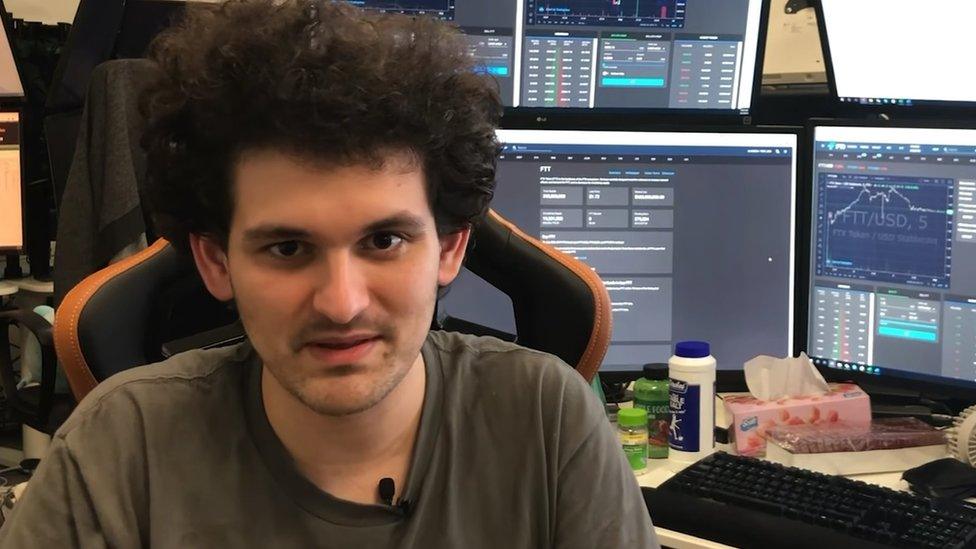
Sam Bankman-Fried in his early days as a crypto trader. His disheveled appearance and “effective altruism” philosophy made him an unlikely financial titan, but his genius for arbitrage trades made him wealthy beyond imagination.
Building an Empire: The Creation of FTX
In April 2019, Bankman-Fried founded FTX, a cryptocurrency derivatives exchange, with Gary Wang, a former MIT classmate and Google engineer. The name stood for “Futures Exchange.” FTX was designed to be a more professional, user-friendly alternative to existing crypto exchanges, targeting institutional investors and sophisticated traders.
FTX grew at an astonishing pace. Within just three years, it became the world’s second-largest cryptocurrency exchange by volume. The company attracted investments from prestigious venture capital firms including Sequoia Capital, Temasek, and SoftBank. By January 2022, FTX was valued at $32 billion, making 30-year-old Bankman-Fried worth approximately $26 billion on paper—one of the youngest billionaires in the world.
Bankman-Fried became crypto’s most visible evangelist. He appeared before Congress to testify about cryptocurrency regulation. He bought naming rights to the Miami Heat’s arena for $135 million, renaming it “FTX Arena.” He secured celebrity endorsements from Tom Brady, Gisele Bündchen, Stephen Curry, Naomi Osaka, and Larry David. FTX’s Super Bowl commercials in 2022 featured Larry David dismissing major innovations throughout history before skeptically dismissing crypto—a commercial that would later seem painfully ironic.
Bankman-Fried cultivated an image as crypto’s responsible adult. While other crypto executives lived lavishly, he claimed to drive a Toyota Corolla and sleep on a beanbag at the office. He pledged to give away most of his wealth to effective altruist causes. He was profiled glowingly in major publications. CNBC called him “the Michael Jordan of crypto.” He was hailed as a visionary who would bring legitimacy and regulation to the Wild West of cryptocurrency.
Behind this carefully constructed public image, however, Bankman-Fried was building something entirely different: a house of cards that would collapse spectacularly, taking billions of dollars of other people’s money with it.
The Fraud: How the Scheme Worked
From the very beginning, according to prosecutors, Bankman-Fried designed FTX to facilitate fraud. The key was Alameda Research, his trading firm. While Bankman-Fried publicly claimed that FTX customer funds were segregated and safe, that Alameda received no special treatment, and that deposits were not used for anything other than facilitating customer trades, every one of these statements was false.
Bankman-Fried and his co-conspirators, including his girlfriend Caroline Ellison (Alameda’s CEO), FTX co-founder Gary Wang, and engineering chief Nishad Singh, created a “backdoor” in FTX’s computer code. This backdoor allowed Alameda to withdraw essentially unlimited amounts of money from FTX without triggering standard margin calls or other safeguards. Alameda had a credit line of $65 billion on FTX—far more than any other customer and more than all customer deposits combined.
Using this backdoor, billions of dollars in customer deposits were secretly funneled from FTX to Alameda. What happened to that money reveals the depth of the fraud. Bankman-Fried and his inner circle used FTX customer funds to:
Cover Trading Losses: Alameda had made catastrophically bad bets, particularly after the crypto market crashed in 2022. Rather than admit these losses, Bankman-Fried used FTX customer money to plug the holes.
Make Venture Capital Investments: Alameda invested hundreds of millions of dollars in various startups and crypto projects, using money that belonged to FTX customers.
Buy Real Estate: Bankman-Fried and FTX executives purchased $300 million worth of real estate in the Bahamas, where FTX was headquartered. Properties included luxury apartments and a $30 million penthouse where Bankman-Fried and nine colleagues lived.
Political Donations: Bankman-Fried became one of the largest political donors in America, giving over $70 million (that can be traced) to candidates and causes, split between Democrats and Republicans. He told prosecutors he gave equally to both parties but hid his Republican donations through dark money groups because he believed “reporters freak the f— out if you donate to Republicans.”
Celebrity Endorsements: Millions of dollars in customer funds paid for celebrity endorsement deals and stadium naming rights.
Personal Expenses: Bankman-Fried and his inner circle lived extravagantly in the Bahamas, though he maintained his “humble” public image. Private jets, luxury cars, and a lavish lifestyle were funded with customer money.

FTX’s sprawling headquarters in the Bahamas, where Bankman-Fried and his inner circle lived in luxury penthouses funded by customer deposits. The company bought $300 million in Bahamian real estate.
The House of Cards: How It All Fell Apart
The first crack in the facade appeared on November 2, 2022, when CoinDesk published an article revealing problems with Alameda Research’s balance sheet. The report showed that Alameda’s assets were heavily concentrated in FTT—FTX’s own cryptocurrency token. This was alarming because it meant Alameda’s supposed billions in assets were largely illiquid and dependent on FTX’s success.
Changpeng Zhao, CEO of Binance (FTX’s main competitor), saw an opportunity. On November 6, he announced via Twitter that Binance would sell all of its FTT holdings, worth about $530 million. This triggered a panic. If Binance was dumping FTT, what did they know? Within hours, FTX customers were trying to withdraw their funds.
The run on FTX was catastrophic. On November 6 alone, customers attempted to withdraw $5 billion. The problem was that the money wasn’t there—it had been sent to Alameda and spent. Bankman-Fried scrambled to find emergency funding, reaching out to investors, competitors, anyone who might bail him out.
On November 8, Zhao announced that Binance had signed a non-binding letter of intent to acquire FTX. For a brief moment, it seemed Bankman-Fried might be saved. But the next day, after conducting due diligence, Binance walked away. They had looked into FTX’s books and realized the company was beyond saving. “Mishandled customer funds,” they said publicly.
On November 10, Bankman-Fried was still trying to raise money and reassuring customers via Twitter. But internally, he knew it was over. FTX had an $8 billion shortfall—customer money that was simply gone.
On November 11, 2022, FTX Trading Ltd. filed for Chapter 11 bankruptcy. Over 130 affiliated companies were included in the filing. Bankman-Fried resigned as CEO and was replaced by John J. Ray III, the attorney who had overseen Enron’s bankruptcy. In his first filing, Ray—who had seen some of the worst corporate malfeasance in American history—stated: “Never in my career have I seen such a complete failure of corporate controls and such a complete absence of trustworthy financial information as occurred here.”
The Arrest and Extradition
As FTX collapsed, Bankman-Fried engaged in a media blitz, giving interviews to try to control the narrative. He appeared on “Good Morning America” with George Stephanopoulos, claiming he had made mistakes but denying fraud. He conducted a lengthy interview with Vox reporter Kelsey Piper via Twitter DMs, where he admitted in surprisingly candid terms that his “ethics” talk had been “mostly performative” and that he had been “really good at” putting on a public persona.
Behind the scenes, federal prosecutors in the Southern District of New York were building a case. On December 12, 2022, they charged Bankman-Fried with wire fraud, wire fraud conspiracy, securities fraud, securities fraud conspiracy, money laundering, and other crimes. That same day, he was arrested by the Royal Bahamas Police Force at his luxury apartment in Nassau.
Bankman-Fried spent 10 days in Fox Hill Prison, a notoriously harsh facility in the Bahamas, before consenting to extradition to the United States. He was flown to New York and appeared before Judge Lewis Kaplan on December 22, 2022. To the surprise of many, he was released on a $250 million bond—though he didn’t actually have to pay that amount. Instead, his parents posted their Palo Alto home as collateral.
Under the terms of his bail, Bankman-Fried was confined to his parents’ home in Palo Alto, California, wearing an ankle monitor. But he couldn’t stay out of trouble. He contacted former employees, used a VPN without permission, and most damagingly, leaked Caroline Ellison’s private diary entries to a New York Times reporter in what appeared to be an attempt to discredit her before she could testify against him.
On August 11, 2023, Judge Kaplan had had enough. He revoked Bankman-Fried’s bail and sent him to the Metropolitan Detention Center in Brooklyn to await trial. It was a stunning fall for someone who had been living in luxury just months earlier.
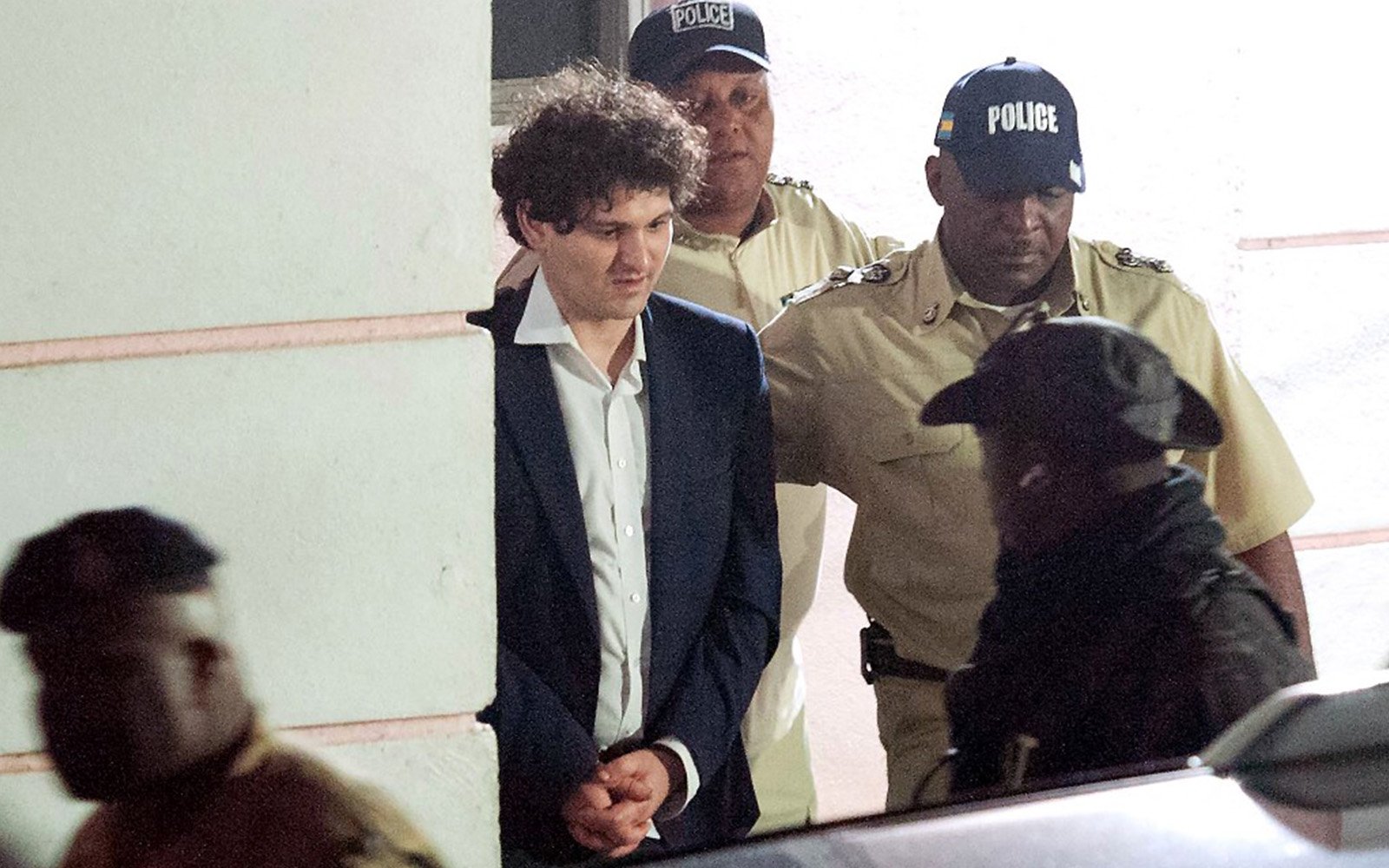
Sam Bankman-Fried is led away in handcuffs by Bahamian police on December 12, 2022, just one month after FTX’s collapse. He would spend 10 days in the notoriously harsh Fox Hill Prison.
The Trial: A Month of Devastating Testimony
The trial began on October 3, 2023, in the Daniel Patrick Moynihan United States Courthouse in Manhattan. Judge Lewis Kaplan presided over what would become one of the most closely watched white-collar criminal trials in years. The prosecution was led by Assistant U.S. Attorneys Nicolas Roos and Danielle Sassoon. Bankman-Fried’s defense team was led by attorney Mark Cohen.
The prosecution’s case was devastating, built largely on testimony from Bankman-Fried’s closest associates—people who had pleaded guilty and agreed to cooperate. These weren’t distant witnesses; they were his friends, his girlfriend, his co-founder. And one by one, they buried him.
Caroline Ellison, Bankman-Fried’s ex-girlfriend and Alameda’s CEO, was the star witness. Over three days on the stand, she methodically explained how Bankman-Fried had directed her to use FTX customer funds to cover Alameda’s losses. She testified that Bankman-Fried had told her to lie to lenders about where Alameda’s money was coming from. Prosecutors played a secretly recorded audio from November 2022 where Ellison told Alameda employees that they had borrowed “a bunch of funds on FTX” that created a shortfall in customer funds.
Perhaps most damning, Ellison testified that Bankman-Fried believed in utilitarianism and felt that rules against lying or stealing inhibited his ability to maximize benefit for the most people. “Sam said something like it’s probably good to be mostly ethical and appear mostly ethical,” Ellison testified, “but we shouldn’t feel constrained by the ordinary rules of morality.”
Gary Wang, FTX’s co-founder and CTO, testified that he created the special code allowing Alameda to withdraw unlimited funds from FTX at Bankman-Fried’s direction. “Did you commit financial crimes while working at FTX?” prosecutor Nicholas Roos asked. “Yes,” Wang replied simply. He admitted to wire fraud, securities fraud, and commodities fraud—all with Bankman-Fried.
Nishad Singh, FTX’s engineering director, testified about the political donations made with customer funds and the lavish real estate purchases. He described how Bankman-Fried pushed him to sign for loans that ultimately came from customer deposits.
The prosecution also presented devastating documentary evidence: leaked Signal messages where Bankman-Fried discussed using customer funds, balance sheets that were admitted to be fabricated, and Bankman-Fried’s own public statements that proved to be lies.
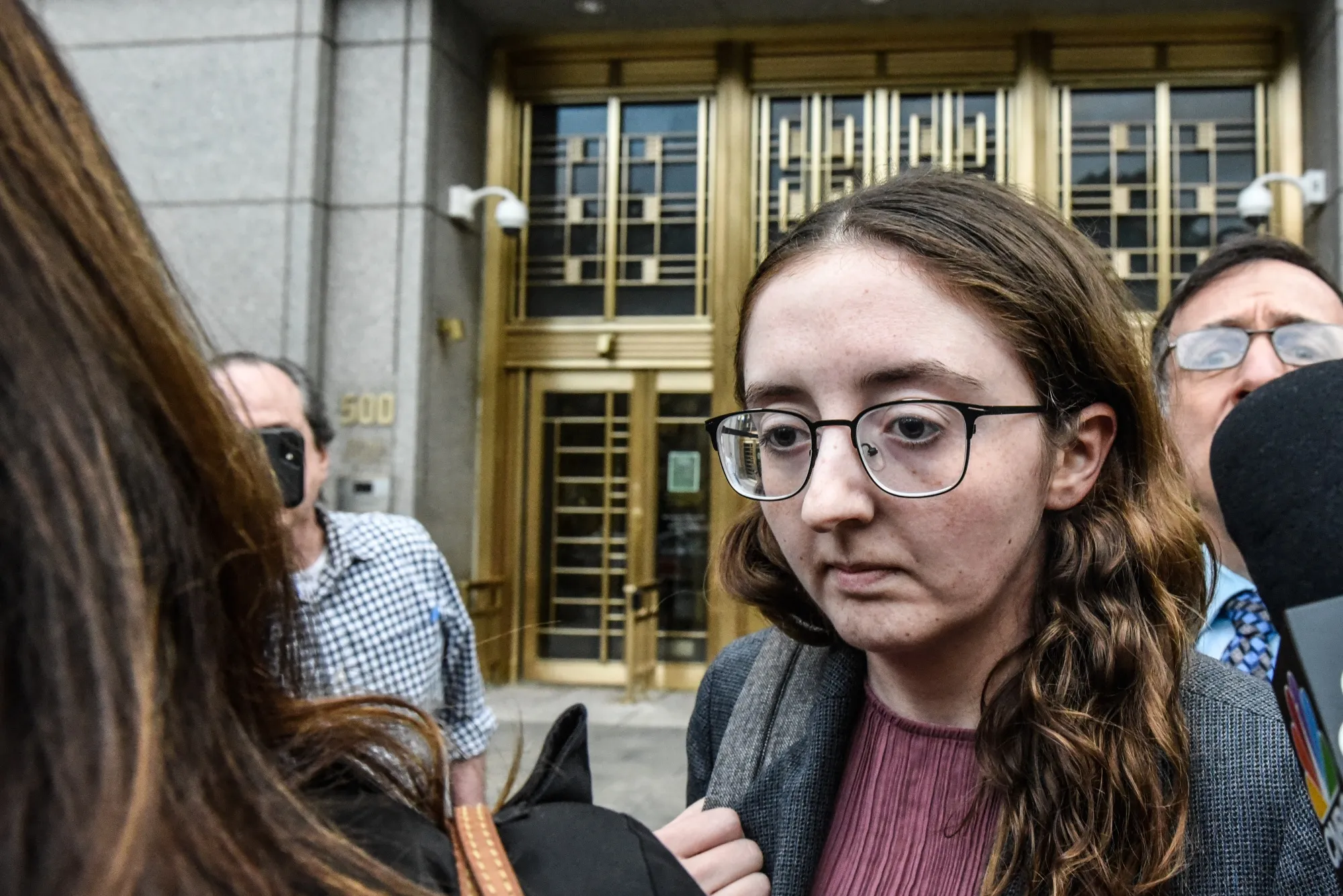
Caroline Ellison testifies against her ex-boyfriend Sam Bankman-Fried in October 2023. Her testimony was devastating, describing in detail how SBF directed her to use customer funds to cover Alameda’s losses.
Bankman-Fried Takes the Stand
Against the advice of many legal experts, Bankman-Fried decided to testify in his own defense. It was a calculated risk that backfired spectacularly. Over three days of testimony—one day without the jury present to determine what he could say—Bankman-Fried attempted to portray himself as overwhelmed, making mistakes, but not criminal.
His defense strategy was to claim ignorance. He said he didn’t know Alameda was borrowing so much from FTX. He claimed he only “skimmed” the fraudulent balance sheets that Ellison sent to lenders. He said he wasn’t closely involved in Alameda’s day-to-day operations, despite being its founder and despite testimony from Ellison that he micromanaged everything.
The prosecution tore him apart on cross-examination. Assistant U.S. Attorney Danielle Sassoon methodically caught Bankman-Fried in contradictions, evasions, and apparent lies. When confronted with his own previous statements or documentary evidence, he would claim he didn’t remember, didn’t know, or didn’t understand. He answered “I don’t recall” over 140 times during his testimony.
Judge Kaplan would later say he had “never seen a performance” like Bankman-Fried’s testimony in his 30 years on the bench. The judge noted that Bankman-Fried was either “outright lying” or being “evasive” during much of his testimony. Legal analysts who watched the trial nearly unanimously agreed that Bankman-Fried’s decision to testify had been disastrous for his defense.
Guilty on All Counts
On November 2, 2023, after closing arguments concluded, the jury began deliberations. Legal experts predicted it would take days given the complexity of the case and the mountain of evidence. Instead, it took less than five hours. At 7:40 PM, the jury announced they had reached a verdict.
“Guilty.” The word was repeated seven times as the jury foreman read the verdict on each count: two counts of wire fraud, two counts of conspiracy to commit wire fraud, one count of conspiracy to commit securities fraud, one count of conspiracy to commit commodities fraud, and one count of conspiracy to commit money laundering.
Bankman-Fried stood emotionless as the verdicts were read. He looked briefly at his parents, who were in the courtroom. His mother’s hand went over her chest; his father put his arm around her. Outside the courthouse, victims and onlookers applauded. One victim held a sign reading “Punk Fraud.”
The speed of the verdict was telling. For a trial that had lasted a month, involved nearly 20 witnesses, and presented hundreds of exhibits, the jury needed very little time to conclude that Bankman-Fried was guilty beyond a reasonable doubt. They believed Caroline Ellison, Gary Wang, and Nishad Singh. They didn’t believe Sam Bankman-Fried.
“This verdict should send a clear message to anyone who thinks they can hide their crimes behind wealth, power, or a fancy website,” said U.S. Attorney Damian Williams. “Justice will be swift, and the consequences will be severe.”
Sentencing: 25 Years in Prison
On March 28, 2024, Bankman-Fried returned to the Manhattan federal courthouse for sentencing. Prosecutors had recommended 40 to 50 years in prison, arguing that the scale of the fraud and Bankman-Fried’s lack of remorse warranted an exceptionally long sentence. The defense asked for just 5 to 6.5 years, claiming Bankman-Fried had already suffered enough and that FTX customers would likely recover most of their money.
Before sentencing, several victims spoke about the impact of Bankman-Fried’s crimes. Sunil Kavuri described speaking to thousands of FTX victims, many suffering from depression and requiring medication to deal with their trauma. “I suffered every day for the past two years,” Kavuri said, looking directly at Bankman-Fried. “I continue to suffer.”
Bankman-Fried himself spoke, expressing what Judge Kaplan would later characterize as insufficient remorse. “I’m sorry about what happened at every stage,” Bankman-Fried said. “It haunts me every day. I made a series of bad decisions.” But he continued to frame the collapse as a liquidity crisis and mismanagement rather than deliberate theft, and he argued that customers would eventually be made whole through bankruptcy proceedings.
Judge Kaplan was unimpressed. Before imposing sentence, he methodically rejected every argument the defense had made. He rejected the claim that customers would recover their money, calling it “misleading, logically flawed and speculative.” He rejected the defense’s claim that Bankman-Fried was unlikely to reoffend, noting: “There is a risk that this man will be in a position to do something very bad in the future, and it’s not a trivial risk.”
Most significantly, Judge Kaplan found that Bankman-Fried had committed perjury during his trial testimony and had shown no genuine remorse. “I’ve never seen a performance quite like this,” the judge said, referring to Bankman-Fried’s testimony. If Bankman-Fried wasn’t “outright lying,” he was “evasive,” Kaplan concluded.
The sentence: 25 years in federal prison and forfeiture of $11 billion. It was less than prosecutors requested but far more than the defense hoped for. With good behavior credits, Bankman-Fried could be released in approximately 18 to 20 years, when he’ll be in his early 50s. His projected release date is currently December 2044.
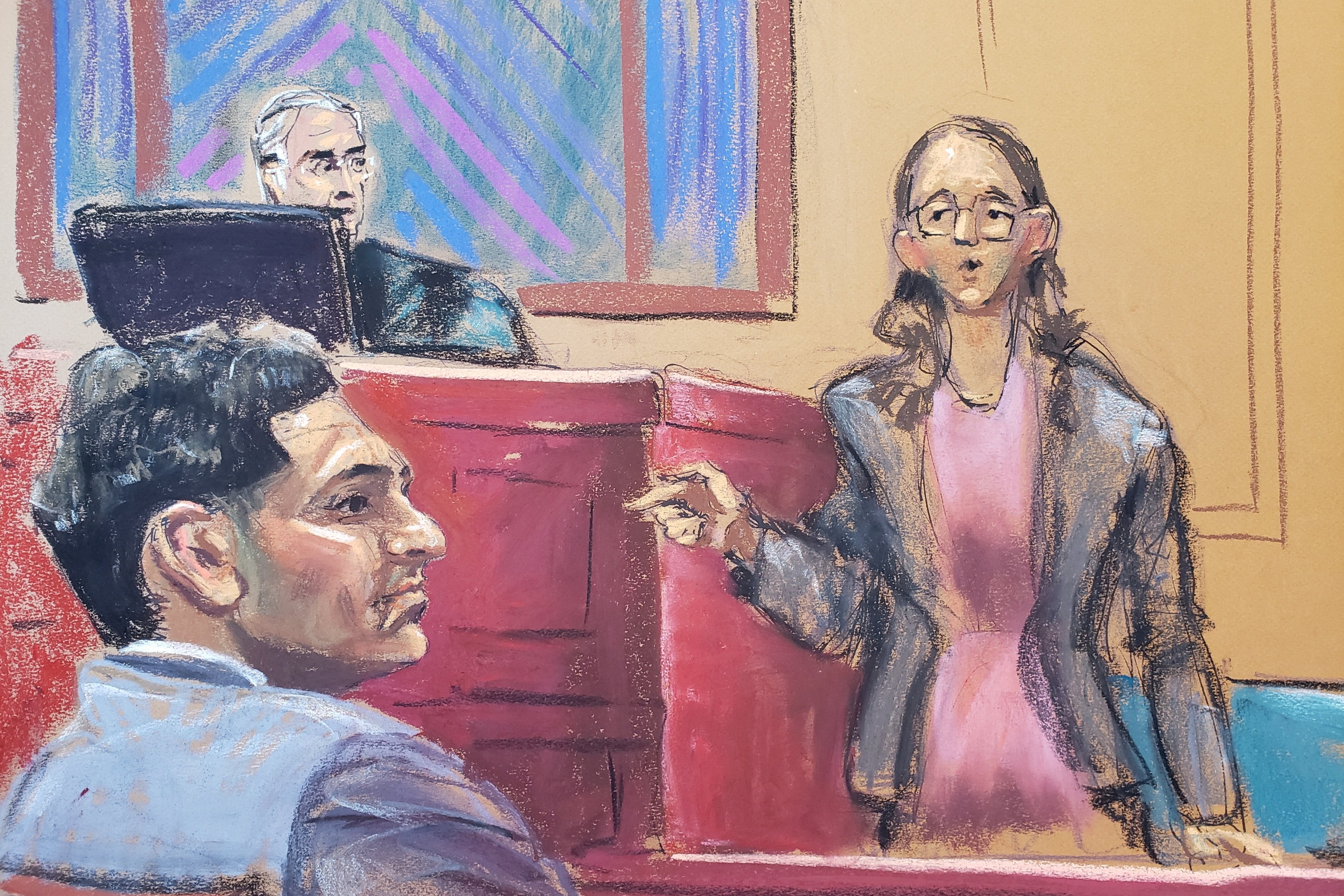
Courtroom sketch of Sam Bankman-Fried at his sentencing hearing on March 28, 2024. Judge Lewis Kaplan sentenced him to 25 years in prison, calling his testimony at trial “outright lying” or “evasive.”
The Co-Conspirators: Cooperation and Consequences
Unlike Bankman-Fried, his three closest associates chose to cooperate with prosecutors, pleading guilty and testifying against him. Their decisions to cooperate resulted in dramatically different outcomes than Bankman-Fried faced.
Caroline Ellison pleaded guilty to seven felonies and fully cooperated with investigators. In September 2024, she was sentenced to just 2 years in prison—a fraction of what she could have received. Judge Kaplan cited her extraordinary cooperation, credible testimony, and genuine remorse. She was ordered to surrender on November 7, 2024, and is expected to be released in May 2026. Unlike Bankman-Fried, Ellison fully accepted responsibility, showing up to court without seeking delays and cooperating at every stage.
Gary Wang pleaded guilty to four felonies. In November 2024, he was sentenced to time served (no additional prison time) and three years of supervised release. Judge Kaplan noted that Wang had provided “substantial assistance” to prosecutors and had been the first to cooperate. Wang has since built a new career in technology and is reportedly doing well.
Nishad Singh pleaded guilty to six felonies. His sentencing is still pending as of December 2025, but prosecutors have recommended no prison time due to his cooperation and lesser role in the fraud compared to Bankman-Fried and Ellison.
The stark difference in sentences highlights how cooperation with prosecutors can dramatically alter outcomes in white-collar criminal cases. Had Bankman-Fried immediately admitted wrongdoing and cooperated, he might have faced just a few years in prison rather than 25.
The Victims: Real People, Real Losses
Behind the legal proceedings and cryptocurrency jargon are real people whose lives were devastated by Bankman-Fried’s fraud. FTX had over 1 million creditors worldwide—individuals, companies, and institutions that lost access to their funds when the exchange collapsed.
Some victims were sophisticated investors who understood the risks. But many were ordinary people who believed Bankman-Fried’s promises that their funds were safe. Teachers, nurses, small business owners, retirees—people who had saved for years and put their money into FTX believing it was a legitimate, secure platform.
The stories are heartbreaking. A teacher in California lost her entire retirement savings. A small business owner in Texas lost the money he needed to expand his company. Investors from Japan to Argentina found their accounts frozen, their money gone. Some victims took out second mortgages or loans to invest in crypto through FTX, believing Bankman-Fried’s assurances that their deposits were safe.
The psychological toll has been immense. Support groups formed online for FTX victims to share their experiences and cope with the trauma of losing their savings. Some reported depression, anxiety, and suicidal thoughts. Marriages ended. Businesses failed. Lives were upended.
As of December 2025, bankruptcy proceedings are ongoing. FTX’s bankruptcy estate has recovered billions of dollars through asset sales and clawbacks from people who withdrew money shortly before the collapse. Estimates suggest customers might eventually recover 70-90% of their losses, though the process will take years. However, this calculation doesn’t account for the opportunity cost—what those funds could have earned if they had been properly invested elsewhere—or the psychological harm inflicted.
The Appeal: Fighting for a New Trial
On April 11, 2024, Bankman-Fried filed a notice of appeal, challenging both his conviction and his 25-year sentence. His new lawyer, Marc Mukasey (who replaced Mark Cohen), has argued that Bankman-Fried did not receive a fair trial and that Judge Kaplan was biased against him.
The appeal makes several arguments. First, it claims Judge Kaplan erred in limiting evidence about Bankman-Fried’s reliance on lawyers’ advice—the “advice of counsel” defense. Bankman-Fried’s attorneys argue he acted in good faith based on legal guidance from FTX’s attorneys. Second, the appeal argues that the judge’s demeanor and comments prejudiced the jury against Bankman-Fried. Third, it contends that the prosecution was allowed to present prejudicial evidence while the defense was improperly restricted.
On September 13, 2024, Bankman-Fried filed an additional motion requesting a new trial, claiming Judge Kaplan was biased. The filing alleged the judge “mocked their defense” and “criticized their questioning in front of jurors.” It also claimed the judge pressured jurors to reach a quick verdict by offering meals and rides home on the first day of deliberations.
On November 4, 2025, the U.S. Court of Appeals for the Second Circuit heard oral arguments in Bankman-Fried’s appeal. His attorney argued that his client had been “presumed guilty” rather than presumed innocent. Prosecutors countered that Bankman-Fried received a fair trial with overwhelming evidence of his guilt.
As of December 2025, a ruling is still pending. Legal experts give Bankman-Fried’s appeal very long odds of success. Appellate courts rarely overturn convictions, especially in cases with such strong evidence. For Bankman-Fried’s appeal to succeed, the Second Circuit would need to find that Judge Kaplan made significant legal errors that affected the outcome—a high bar to clear.
Life in Prison and the Future
Bankman-Fried is currently incarcerated at the Metropolitan Detention Center in Brooklyn, the same facility where he awaited trial. He will eventually be transferred to a federal prison to serve his sentence. Reports indicate he may be sent to FCI Otisville in upstate New York or another medium-security facility.
Life in prison has been a dramatic adjustment for someone who once lived in luxury in the Bahamas. Bankman-Fried reportedly struggles with the lack of internet access, limited vegan food options, and the general conditions of incarceration. Author Michael Lewis, who wrote “Going Infinite” about Bankman-Fried, predicted he would “go mad” without the internet.
In May 2025, it was reported that Bankman-Fried’s projected release date had been reduced by approximately 4.5 years due to “Good Conduct Time” credits and time served before sentencing. His current expected release date is December 2044, when he will be 52 years old. However, this could change if his appeal succeeds or if he receives additional credits through prison programs.
Bankman-Fried has reportedly been writing from prison, posting through intermediaries on social media platform X. In September 2024, he published a 15-page document claiming that Alameda and FTX “were never insolvent” and that customer funds could have been repaid in full. This claim directly contradicts the bankruptcy proceedings, court findings, and his own trial testimony, suggesting Bankman-Fried still hasn’t fully accepted responsibility for his crimes.
The Broader Impact: Lessons from FTX’s Collapse
The FTX collapse and Bankman-Fried’s fraud have had profound implications for the cryptocurrency industry, financial regulation, and public trust. The case has become a cautionary tale studied in business schools, law schools, and economics departments worldwide.
For the Crypto Industry: FTX’s collapse dealt a severe blow to cryptocurrency’s mainstream credibility. It validated critics who had long warned that crypto was a Wild West of fraud and manipulation. The scandal wiped out billions in market value and scared away potential investors and users. However, it also spurred calls for better regulation and oversight—something many in the industry had resisted but now acknowledge as necessary.
For Regulators: The case exposed massive failures in oversight. How did Bankman-Fried operate a multibillion-dollar exchange with virtually no regulation? Why were there no safeguards to prevent customer funds from being misused? The SEC, CFTC, and other agencies have since moved to implement stricter regulations for crypto exchanges, though the industry remains less regulated than traditional finance.
For Investors: The collapse reinforced fundamental investment principles: Don’t invest more than you can afford to lose. Diversify your holdings. Be skeptical of promises that sound too good to be true. Verify that your assets are actually segregated and safe. The FTX victims who lost everything had violated these basic principles, trusting a charismatic CEO’s assurances rather than demanding proof.
For Effective Altruism: Bankman-Fried’s use of effective altruism philosophy as a shield for his fraud has damaged the movement. While EA’s core principles remain sound—using evidence and reason to do the most good—Bankman-Fried’s instrumental view of ethics (rules are optional if breaking them produces better outcomes) has been rejected by serious EA thinkers. The movement now grapples with how someone claiming to embody its values could commit such fraud.

The FTX Arena in Miami had its name removed after the exchange’s collapse. Miami-Dade County scrambled to distance itself from the scandal and find a new sponsor for the Miami Heat’s arena.
Comparisons to Bernie Madoff
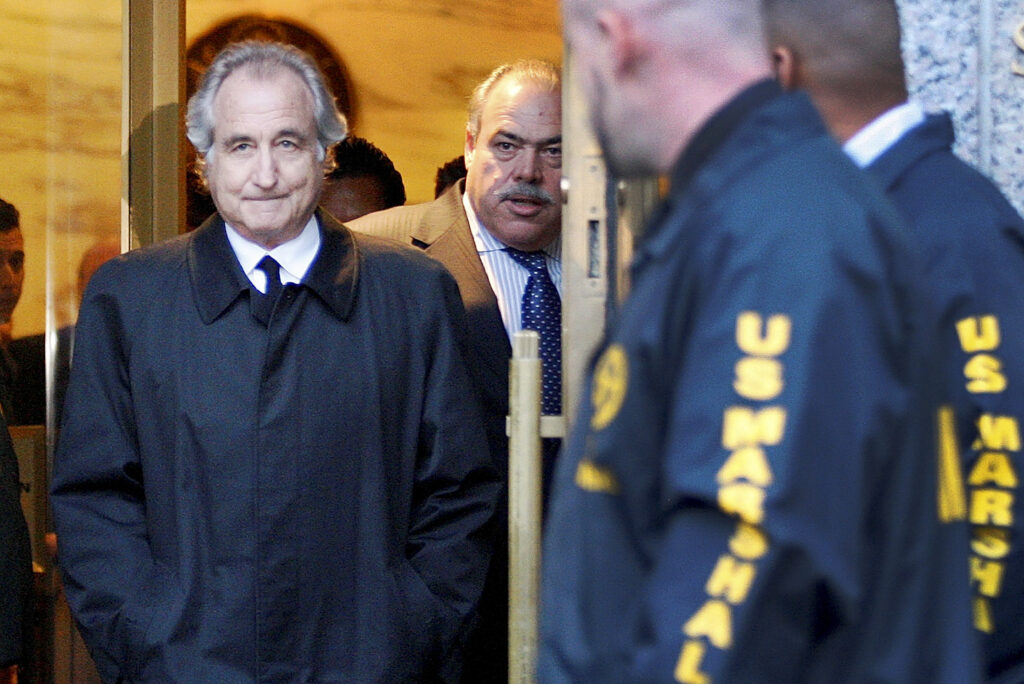
Sam Bankman-Fried has been repeatedly compared to Bernie Madoff, who orchestrated the largest Ponzi scheme in history before FTX. The comparison is apt in many ways—both men were charismatic figures who used their reputations to attract billions in investments, both secretly misused customer funds, and both left thousands of victims in their wake.
However, there are important differences. Madoff’s fraud lasted decades; Bankman-Fried’s lasted just a few years. Madoff primarily targeted wealthy individuals and institutions; Bankman-Fried had over a million victims across all economic classes. Madoff’s Ponzi scheme was the traditional kind, paying early investors with money from new ones; Bankman-Fried’s fraud was more direct theft—taking customer money and gambling with it.
Perhaps most significantly, Madoff was sentenced to 150 years in prison at age 71 and died in custody in 2021. Bankman-Fried received 25 years at age 32 and will likely serve about 18-20 years, meaning he could be released in his early 50s with potentially decades of life remaining. This difference in sentences reflects evolving sentencing guidelines and Bankman-Fried’s younger age at the time of his crimes.
Both men, however, share the dubious distinction of orchestrating financial frauds so massive that they became cultural touchstones—shorthand for greed, deception, and the dangers of trusting charismatic figures with your money.
The Unanswered Questions
Despite the trial and conviction, many questions about FTX remain unanswered. Where exactly did all $8 billion go? While prosecutors traced much of it to investments, political donations, and real estate, there are still gaps in the accounting. Did other FTX executives beyond the four who were charged know about the fraud? What about the venture capital firms that invested billions—should they have known something was wrong?
Perhaps the biggest question is one of personality and psychology: How did Sam Bankman-Fried—an MIT graduate from a highly educated family, someone who claimed to care deeply about ethics—end up committing one of the largest frauds in American history? Was it simply greed? A misguided belief that the ends justified the means? An inability to admit mistakes that spiraled out of control?
Psychologists who have studied the case note that Bankman-Fried displayed classic narcissistic traits: an inflated sense of self-importance, a belief that normal rules didn’t apply to him, and an inability to accept responsibility for his actions. The effective altruism philosophy, with its utilitarian calculus, may have provided intellectual cover for behavior he knew was wrong but could justify to himself as ultimately beneficial.
Author Michael Lewis, who spent extensive time with Bankman-Fried while writing “Going Infinite,” came away with a more sympathetic view than most. Lewis portrayed Bankman-Fried as someone who genuinely didn’t understand social norms and made catastrophically bad decisions rather than deliberately setting out to commit fraud. This interpretation was heavily criticized by prosecutors, victims, and legal analysts who saw it as naive at best and an apology for criminal behavior at worst.
The Lasting Legacy
Sam Bankman-Fried’s story will be studied for generations as a cautionary tale of what happens when ambition, fraud, and lack of oversight collide. His rise was meteoric—from obscure trader to billionaire in just three years. His fall was even faster—from crypto’s golden boy to convicted felon in just 13 months.
The FTX collapse wiped out $32 billion in value, devastated thousands of victims, and shook confidence in an entire industry. It exposed the dangers of unregulated financial markets and the limits of self-governance. It showed how easily fraud can hide behind a veneer of legitimacy when charismatic leaders exploit public trust.
For Bankman-Fried personally, his legacy is ruined beyond repair. The young man once compared to financial legends is now compared only to fraudsters like Bernie Madoff. The billions he claimed he would give to charity were stolen from ordinary people who trusted him. The effective altruism he preached was revealed as window dressing for profound selfishness.
As he sits in prison, approaching his 33rd birthday in March 2025, Bankman-Fried has decades to reflect on the choices that destroyed his life and harmed so many others. Whether he will ever truly accept responsibility for what he did remains to be seen. But one thing is certain: his name will forever be synonymous with one of the greatest financial frauds in American history, a stark reminder that even the most successful-seeming empires can be built on lies—and that those lies always, eventually, collapse.
If you believe you’ve been a victim of investment fraud:
SEC Office of Investor Education and Advocacy: (800) 732-0330
FINRA Investor Complaint Center: finra.org/investors
FTC Report Fraud: reportfraud.ftc.gov
For FTX Creditors:
FTX Bankruptcy Information: kroll.com/ftx-claims
Mental Health Support for Fraud Victims:
National Suicide Prevention Lifeline: 988
SAMHSA National Helpline: 1-800-662-4357
DISCLAIMER: All information presented in this article is based on publicly available court documents, trial transcripts, U.S. Department of Justice statements, SEC filings, and credible news sources including The New York Times, Wall Street Journal, NPR, CNBC, and other verified outlets. Sam Bankman-Fried was convicted on November 2, 2023, and sentenced to 25 years in prison on March 28, 2024. His appeal is currently pending as of December 2025. This article is intended for educational purposes. Crime Recap makes no independent claims beyond established facts from official sources and court proceedings. For our complete legal disclaimer, please visit our Legal Disclaimer page.
We stumbled over here coming from a different web address and thought I might as well check things out.
I like what I see so i am just following you. Look forward to looking at your web
page yet again.
Thank you so much!